


Infraspinatus and Teres Minor
Next up in our rotator cuff series is the oft overlooked external rotators. When it comes to lifting and sports, internal rotation gets all the glory. Nobody does anything really cool with external rotators, right???? Well, we'll see.
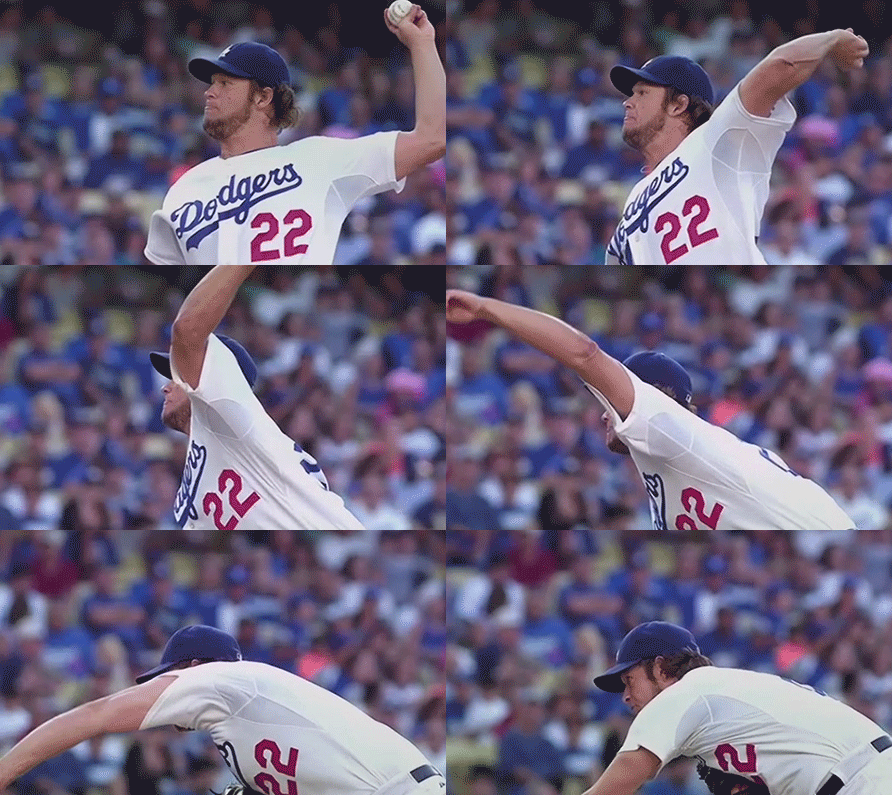
First let's talk about who these muscles are. Meet the infraspinatus and the teres minor. As seen above, they are two muscles that attach to the posterior (backside) of the humerus so when they contract your upper arm rotates back or, um, externally. Give it a try. Bend your elbow and place your hand on your belly. Now, keeping your elbow at your side, move your hand away from your abdomen like opening a door. Alternatively place the back of your hand on your lower back and try to push through your back. Both of these engage the external rotators. The work when you hand is over head too, as you see Clayton Kershaw's arm in extreme external rotation before coming forward and internally rotating.
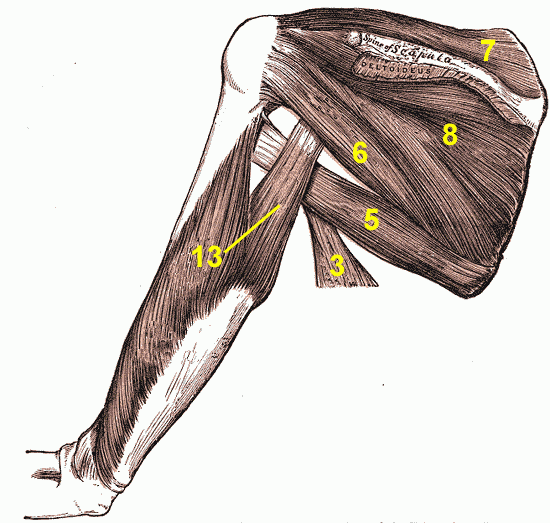
Click on the image to learn more about #6 the Teres minor muscle on the dorsum of the left scapula, with #3 being Latissimus dorsi muscle, #5 is Teres major muscle, #7 is Supraspinatus muscle, #8 is Infraspinatus muscle, and #13 is long head of Triceps brachii muscle
What's up with their names? Well, infraspinatus is named based on its location below the spine of the scapula just like the supraspinatus, and the teres minor has a big brother teres major that are both small roundish muscles (teres meaning rounded) both located just inferior to the infraspinatus. Each teres has a slightly different action based on its insertion on the humerus. The infraspinatus and teres minor both attach at the same area on the head of the humerus and their tendons make up the capsule of the shoulder joint as well.
Being two members of the rotator cuff, they are major shoulder stabilizers as well. All 4 of the rotator cuff muscles attach at the head of the humerus and you can imagine if they all contracted equally then they would just pull that ball of the humerus firmly into the socket of the glenoid which is the shoulder joint. In fact, they must do this to prevent Clayton's arm from flying off towards home plate and you keep your shoulder from dislocating every time you hang on a pull-up bar or push on your bench press.
This is called active stabilization. The amount of force acting on the shoulder joint when throwing a pitch of 90mph is just too much for some soft tissue and ligaments to hold a shoulder joint in place. The rotator cuff muscles must all contract to keep that angular velocity from pulling the shoulder joint fully out. In fact, rehab for shoulder dislocations is all about exercising those rotator cuff muscles to keep the shoulder from coming out again.
Furthermore, those sexy pectorals and deltoids that you love to work out have a tendency to pull the shoulder joint partially out of joint called subluxing, which can lead to pinching or impingement of the tendons, nerves, or other soft tissue and can cause pain and inflammation. When the deltoid contracts the head of the humerus wants to migrate upwards and smash that poor supraspinatus tendon into the acromion, and when the pec major contracts the head of the humerus wants to slide forward giving that rounded shoulder look of poor posture and worse yet anterior shoulder pain.
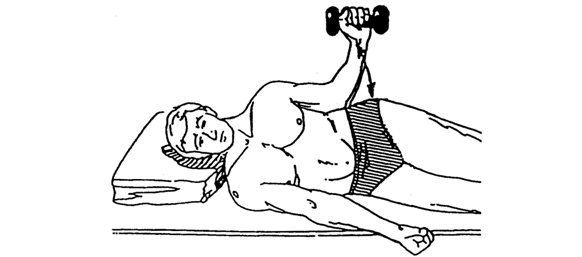
So how do we fix these potential problems and have healthy shoulders? Well, based on my Google search for strengthening the external rotators, we just need to strip down to our underwear, lie on our side on a giant book, and wave and olde-timey dumbell up and down. Actually, that will work! It'll just look awkward at the gym. So to look cooler, do what this guy does...
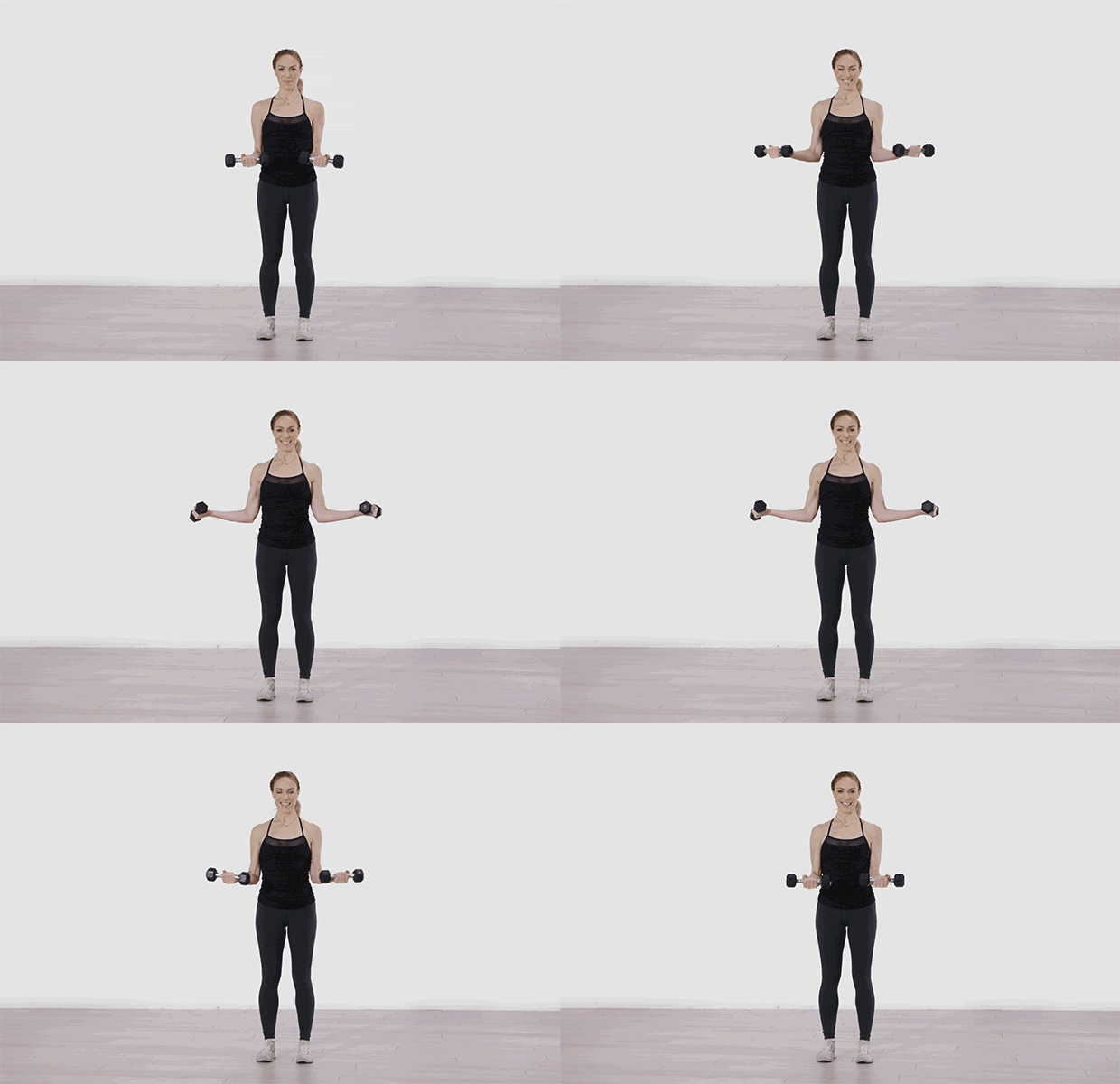
NOOOOOO!!!! Don't really do this, at home or at the gym. See what this meathead forgot that our underwear model remembered was gravity. So this guy does a nice isometric biceps workout with a little of external rotation activation, but nothing that really overloads the infraspinatus or teres minor before the biceps give out.
THE WORKOUT
A real workout of the external rotators does not need a lot of weight, and is easier done with a band as resistance instead of lying sideways to work against gravity. The video below on the left is a good way to increase the workload during the eccentric phase, which is helpful if the muscles/tendons are already inflammed. Isometric work is good for rotator cuff work as well because many times this is the main function of the external rotators not to produce power but to stabilize for other movements. My friend from AthleanX does a good job explaining that.
AND NOW FOR SOMETHING COOL...
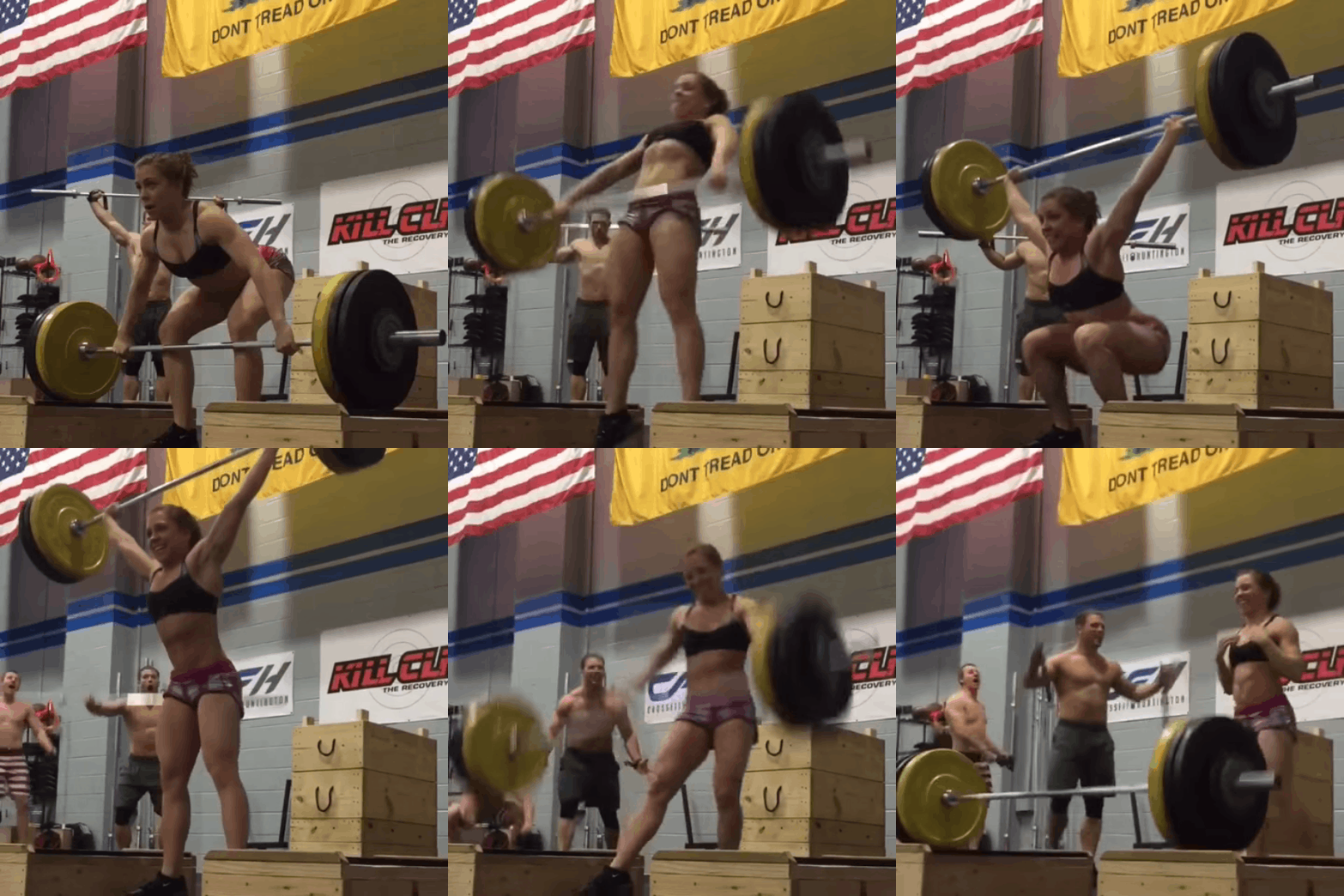
This girl here just kills it! She puts all our external rotator cuffs to shame. At 130 lbs she cleans 180!!! Click on the image to read her story. Don't think that weight is not trying to push her shoulder right out of its shallow socket. Her rotator cuff muscles rock as she pulls that bar and externally rotates that weight overhead....and you thought the infraspinatus and teres minor never got any love.

Levator Scapulae
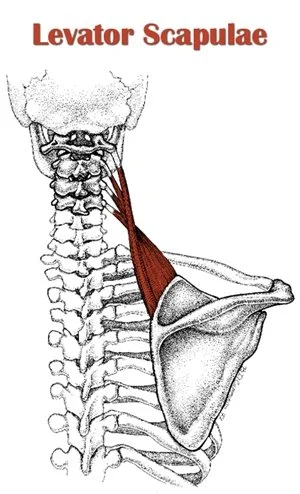


FIRST, SOME ANATOMY...
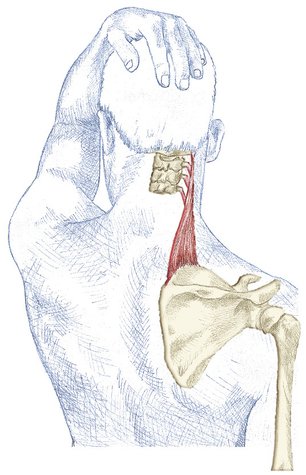
As you can see, the levator scapulae originates from the top of the shoulder blade, scapula, and inserts on the top four vertebrae. As it's name implies it will elevate the scapula with contraction, but more often, with the scapula held tight by the lower trapezius, it allows you to push your head forward like you're leaning in for a kiss (without your chin simply dropping to your chest), or pull your head back like you just took a whiff of some terrible perfume. These are, respectively, the eccentric (lengthening) and concentric (shortening) contractions of the muscle.
Unlike many of the other muscles we have looked at thus far, it is primarily a postural muscle, and definitely not a muscle that needs to be "worked out." For one reason, hidden below the thick traps, you'll never see it, and for another, it is used to long, sustained static contractions throughout the day and not designed or well suited for bursts of activity such as 10 reps of concentric/eccentric contractions. That's not to say it doesn't deserve some attention and even some training, however.
ON TO THE EXERCISES...
Well, more accurately put, on to the stretches. If you do an internet search for "levator scapulae" most of the hits will be for massage and stretching techniques. This is because this is an often an over-active, over-fatigued muscle that can cause pain. Now, I'm not sure technically what muscle knots are (and I don't know if anyone does), but I have experienced them, and definitely felt them on a few friends who had pain and knots in the area of the levator scapulae. In fact, I've even done a few trigger point injections here. Irregardless, of what muscle knots really are, it does feel good to stretch this muscle, and some people even think enough stretching can cause a "myofascial release" that will reduce pain. Wellllll, maybe that's not real science either, but it can't hurt right???
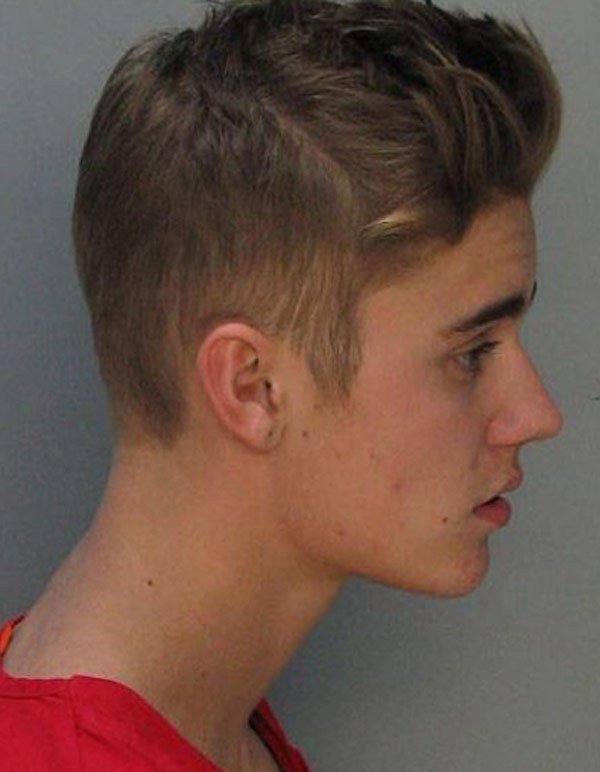
THE REAL PROBLEM IS....chronic head forward posture. Now freeze! Before you think, "Do I have this?" Put your index finger on your chin and see how far back you can push your head over your chest. Ah, doesn't your neck feel better? You probably were in a forward head posture reading this screen. This also is called texting neck or office neck syndrome. There are a million websites, products, videos, etc that you can find on it. Now, in my opinion, if you know the anatomy, you'll be able to fix it on your own, or at least figure out who is trying to sell you snake oil by using fancy anatomical and biomechanical terms.
So what does this have to with the levator scapulae, or as this article put it, the dreaded levator scapulae??? Look at the Bieb's head. Gravity says it should just fall forward and he should spend most of his concerts looking at the floor. His neck vertebrae are hardly stacked on top of one another. Instead, they are all leaning forward. S0 what is it that keeps those puppy dog eyes looking forward? Well, the neck muscles, of course, and one of them being that muscle, the levator scapulae, we love to feel massaged after a long day in the office.
WHAT DO WE DO...
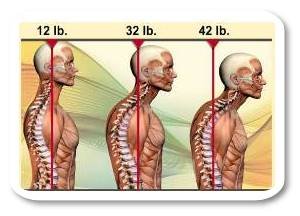
Well, as mentioned there are a million or so websites, books, and products that promise to fix your posture problem, and many of them are probably really good. The question is, which ones??? Well, as I said in the intro, this has lead me down a tangent that I haven't quite finished. Also, because this posture is a multi-muscle problem, I've broadened my search to other muscles and exercises.
Bottom line: I haven't finished my search, but also need to address some other muscles besides the over-stretched, over-worked levator scapulae, so I'm going to do that in some upcoming "episodes." For now, check out the resources below and start thinking about your posture.
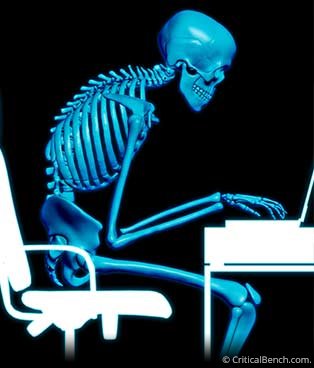
For just $10, you can fix at https://www.forwardheadposturefix.com/
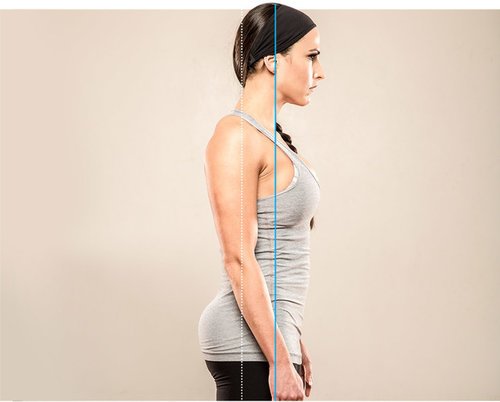
Or, Click above to check out Bodybuilding.com's article on posture.

Subscapularis
In the fantasy draft of all the muscles in the body, this might not be the flashiest, strongest, biggest first overall pick, but this late round, underrated little muscle could definitely help you win some championships. Yes, I'm talking about the Tom Brady of muscles the subscapularis. This little guys is invisible to the naked eye because it hides under the scapula between it and the ribcage. It reaches out and grabs the upper arm to cause...


Internal rotation...

As the image at the top of the page shows us, when your arm is at your side, contraction of the subscapularis internally rotates your arm so that you pat yourself on the belly, maybe even reach into your back pocket for your wallet. Not the sexiest of moves, but bring your away from your body with your hand overhead while you internally rotate the shoulder joint, and now you're doing a throwing motion, that if perfected, can get you into the Hall of Fame, win a World Series, make it to the Olympics, and make you look really cool.
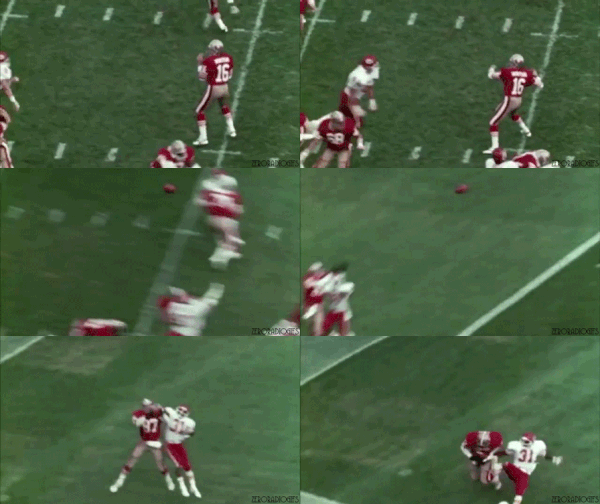


So let's go train....

Click on the image for more training tips.
Well, not so fast my friend. Chances are if you workout with any regularity or play sports, you already have strong internal rotation. Perhaps a little too strong. Actually, if you're reading this page you're probably not concerned with decreasing your strength. When I say too strong, I mean relative to those external rotators we looked at last week. As mentioned, many exercises and sport specific motions involve internal rotation with the arm above your head. Over time, your shoulder flexors and adductors like the pectoralis major anterior deltoids can become dominant, leading to a rounded shoulder posture.
There is a reason I left this rotator cuff muscle for last, and that is because it is the least likely to be weak. Sure you want to make it stronger so you can throw a baseball faster, but just by repeatedly throwing you are usually getting all the exercise it needs. Still, it's not a bad idea to do a warm-up of all of the tendons and muscles of the rotator cuff every time you do heavy pushing or pulling exercises, especially overhead lifts.
Training the subscapularis is simple once you know the motion. Of course, you have to lie on your side to work against gravity, so I suggest working with a band or a cable pulley machine. With your arm at your side, internally rotate to your belly against the resistance, but even better, move abduct your arm with your hand above your head to perform internal rotation as in the image above.
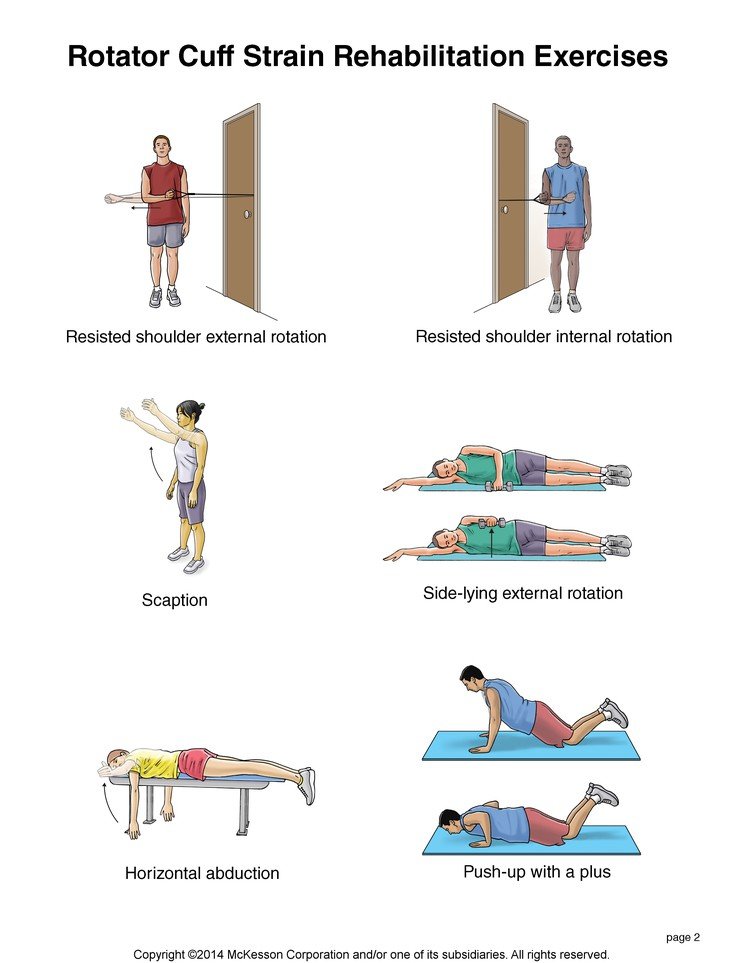
DON'T FORGET YOUR EXTERNAL ROTATORS!!!! Every time you train your subscap. Typically they are much much weaker. Don't believe me??? Set the cable pulley machine to 30lbs and try internal rotation vs external rotation. I gaurentee that your internal rotation will be stronger. I usually set the machine to 30lbs for internal rotation and 20lbs for external rotation for a warm-up, but I prefer the constant tension of band work and just adjust the distance from the point it is secured to ajdust tension.

Serratus Anterior

Notice how the muscles attach the medial border of the scapula to the ribs. Courtesy: breakingmuscle.com/yoga
The Serratus Anterior
RED BULL MIGHT GIVE YOU WINGS, BUT SCAPULAR WINGING IS NOT SOMETHING YOU WANT WHEN YOU'RE WORKING OUT.
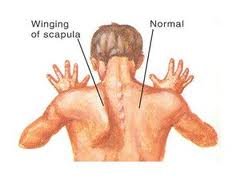
What is scapular winging? The scapula are two triangle shaped bones on your upper back often referred to as the shoulder blades. Your shoulder blades help form your shoulder joint by joining the upper arm bone, the humerus, to the scapula at the glunohumoral joint. The scapula also attach by a non moving joint call the AC joint to the clavicle. Aside from these two attachments however the scapula do not attached to any other bone. Essentially the scapula are floating bones attached to your upper back only by muscles. One of the most important muscles that attaches the shoulder blade to your torso is the serratus anterior.
This curious muscle the serratus anterior attaches the underside of the scapula to your ribs underneath your armpits as pictured above. Check out the picture below to see a well-defined serratus anterior. When the serrated anterior contracts it pulls the shoulder blade forward pulling your entire shoulder joint forward it to hunched over position or a boxer throwing a punch in full extesion. If this muscle is not functioning right, during a normal push up the shoulder blades will push out away from your back causing scapular winging as pictured above. This is not healthy and not a properly functioning shoulder joint. There are nerve injuries that can cause this but addressed here is that lack of training and attention can lead to shoulder dysfunction and sometimes pain.

Boxer Manny Pacquiao works his serratus anterior with every punch.
Of all the muscles that act on the shoulder of the serrated anterior is probably the least popular. The much glorified pectoral muscles, well-defined deltoid muscles, and bulging latissimus muscles are much more desired than a cut serratus anterior. Even the rotator cuff muscle get more press. When properly trained however, you can you can see where the muscle gets its name from the sawtooth pattern of the muscle when it is well defined. More important than its appearance however is its proper functioning for fluid, healthy shoulder movement.
How do I know if my serratus anterior is functioning properly? Have a friend look for scapular winging while doing a push-up on the floor or against the wall. The medial border of the scapula should not lift off the thoracic wall while pushing against gravity. If this happens you need a stronger serrated anterior.

How do I exercise my serratus anterior? As just this muscle ask primarily as a stabilizer during push-ups and pushing exercises. Focus on keeping your shoulder blade stable while performing these pushing exercises and even better than that, when you reach lockout of your push-ups with your elbows fully extended pull your shoulder blades forward separating them lifting your body a few more inches off of the ground. Hold it in this fully flexed position until you feel the serratus anterior muscle contracting next to your ribs (or try the exercise to the left). This may take some practice but you'll find your benchpress getting stronger and you will be able to do more push-ups when this little muscle doesn't get so easily fatigued.
Good luck and keep pushing for a serrated sharp physique.
For more exercises check out:
and for more information on pathologic sacpular winging (from muscle paralysis for example) check out: www.shoulderdoc.co.uk

Gluteus Minimus

Well, we're down to our last glute, and it's a small one so this will be a short post. Of course, it is the smallest of the gluteal muscles and hidden under the gluteus medius entirely so you won't be able to flex this muscle in the mirror no matter how hard you try.
In addition to being just deep to the glute med, the fibers of the gluteus minimus also basically run in a similar direction. They originate from wing of the pelvis just below the origin of the gluteus medius and then terminate on the anterior aspect of the greater trochanter of the top of the femur just in front of the gluteus medius. Words don't really do it justice, so check out the video below to see the anatomy. Once you see the origin and insertion of the muscle, it is easy to understand how contracting (shortening) the muscle leads to its action. Form follows function!!!
So now we see how the gluteus minimus (and the gluteus medius) move the hip away from midline (abduction) and because that little muscle inserts on the anterior portion of the femur then its contraction will also flex the hip and internally rotate. It's a relatively small muscle compared to all of the other muscles that act on the hip, but along with the gluteus medius is hugely important in stabilization. People with very weak gluteus medius and minimus can have a pathologic sign called the Trendeleberg sign or Trendeleberg gait. Check out the excellent video to the right for its description.
Hopefully we've added hip abduction to our workout routine based on last week's discussion of the glute med and work in the frontal plane. Lastly, though, the hips have a huge range of motion best seen in these freestyle soccer skills below. While the gluteus maxiumus gets all the glory, the little muscles in the hip like the gluteus minimus, pirifomris, superior and inferior gamelli, obturator, and quadratus should get some time in the limelight since they help control all these subtle and complex movements of the hip. Enjoy.


Gluteus Maximus
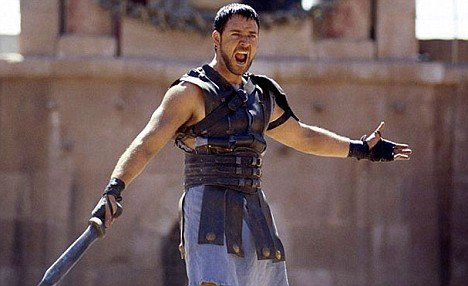
The Gluteus Maxiumus
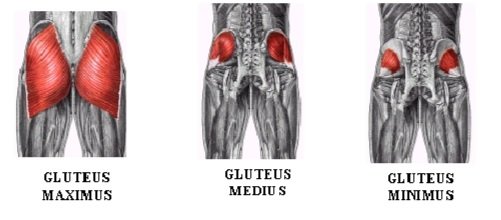
Now I have to admit this was one of my favorite pages to make ; ) butt, only partly for the reason you're thinking. I don't know whether it was J-Lo, Kim Kardashian, or Sir Mix-a-lot, but at some point having a big booty came into fashion. Now, I am not here to talk to you about this. My focus is always on form and function. So while there may be some admiring of form, most of the purpose of this post is to start to understand the value of the gluteus maximus, the biggest, and hopefully, the strongest set of muscles in your body.
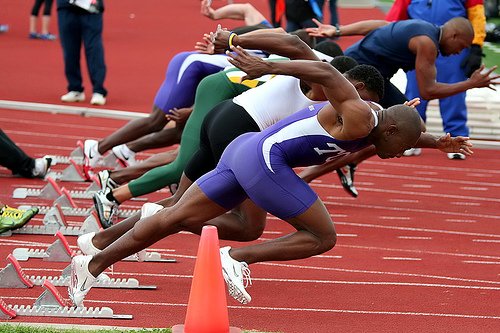
In fact, this muscle is so big that it just might need two posts, and even more pages to talk about it and its companions, the glute medius and minimus. This group of hip extensors should be engaged and the driving force for our heaviest, lifts such as the squat and deadlift and responsible generating power in almost almost every athletic endeavor. From a sprinter coming off the blocks, to a basketball player jumping for a dunk, and a pitcher throwing a fastball, most of that force is generated at the hips with incredible hip extension from the glutes.
This group of muscles is immeasurably important in any sport/lifting event. In my younger days, I had a 36"ish vertical, and could dunk a basketball despite only being 5'8". However, when coming down for a rebound I had a catastrophic ACL/MCL/meniscus knee injury that required reconstruction and my vertical has never been the same. It was not for years later, however, when I came down with patellar tendonitis that through rehab I realized that I was not longer activating my left gluteal muscles (oh, the shame!!!). Having never been able to regain my bounce, I hadn't realized that I had lost all my power to jump and dunk not because my quads had atrophied (although they had and I worked hard to gain back the size), but because I never rehabbed my glutes back to their old form so this post hits particularly close to home with my "lazy" left gluteus maximus keeping me down.

So after realizing I had a lazy glute, I worked through the above videos to help turn it on, but why? While it is tempting to think that working out the calves and quads with squats and toe-ups will help us jump over seven footers (like Vince), it is the glutes that provide that essential hip extension when exploding off of the floor. Most of Vince Carter's power comes from coiling up like a spring with a good gather and then explosive hip extension for push-off (like in the step up gif below). Knee extension and ankle plantar flexion add a fair amount of power during push off as well, but it's that hip extension that primarily powers sprinters off of the blocks and jumpers into the air.
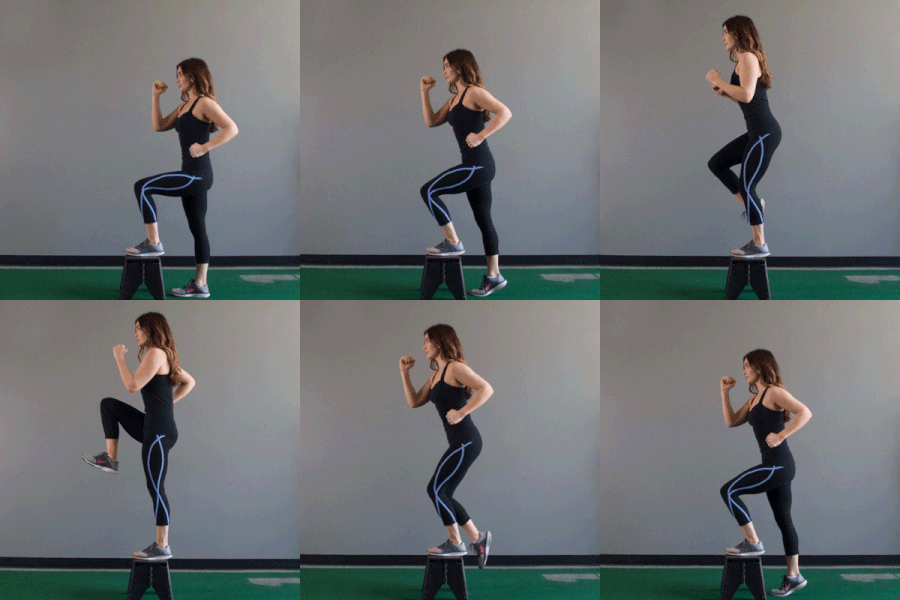
The gluteus maxiums, unlike many muscles, only crosses one joint, the hip. Its primary responsibility is to extend the hip (with a little hip external rotation if needed). For whatever reason this is something that we learn to avoid as we get older. Ever heard the phrase, "lift with your back"? Yeah, we tend to bend over at the waist instead of flexing the hips. Try it on yourself. Stand up from wherever you are sitting. Did you bend at the waist forward before standing? You were putting the weight all over your knees and using knee extension to stand then straightening your back. Instead, try to stand keeping your back completely vertical and driving your heels into the floor. Feel your glutes engage??? Congrats, you're half-way there.
Bottom line, we need to work on hip extension, not using our weaker back muscles or even our quads (lest we get patellar tendonitis like me) to stand up or jump up. Notice the hip extension action stepping up on that box. It's much more powerful than the leg extension of the quads or the minimal plantar flexion of the calves. If you want power in your lifts and jumps and, ok, just maybe look better in a swimsuit. you need to work out those glutes.
I have to admit most of these workouts are just aimed at the aesthetics, which is not the only point, but don't worry just activating those glutes will improve the mind-muscle connection and wake up and strengthen those glutes.
THE WORKOUT:
Seated squat
Cable kickbacks
Overhead squat on stability ball
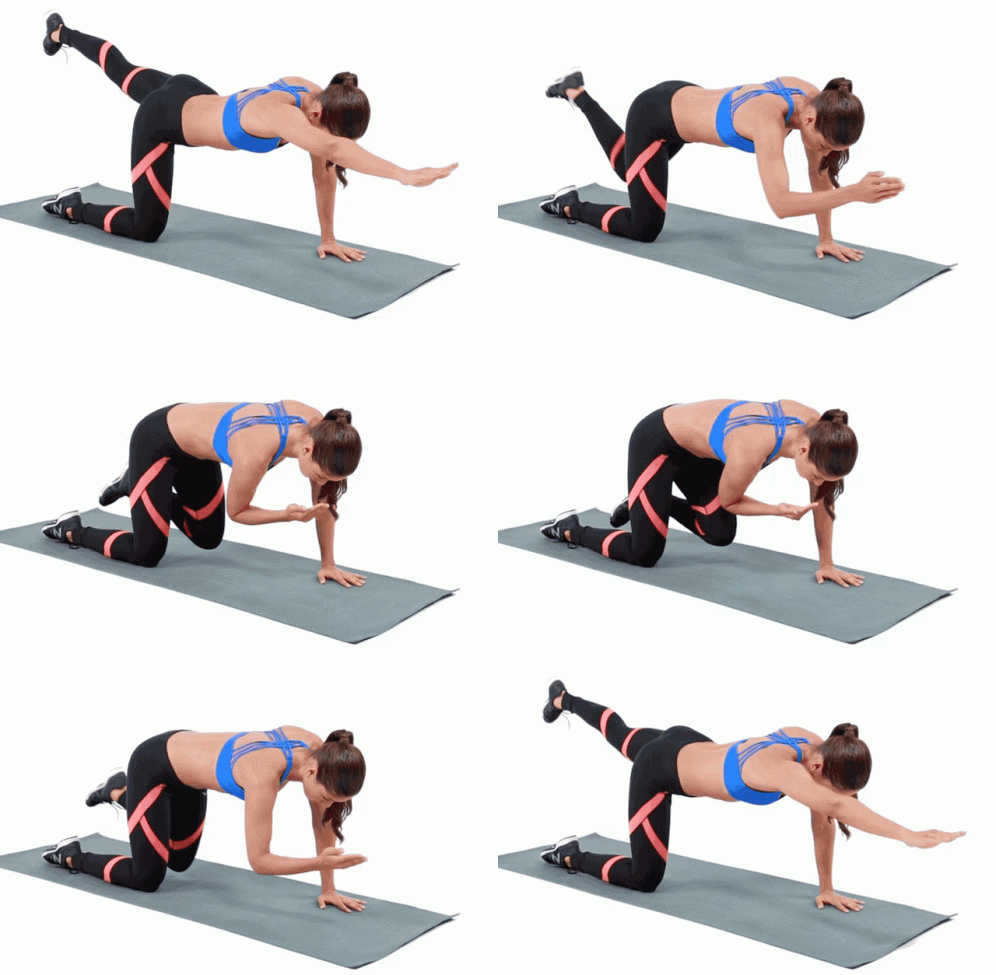
Single leg kickback on stability ball
Squat jump over step
Shuffle over step
Split squat
Stiff-leg deadlift
Prowler push
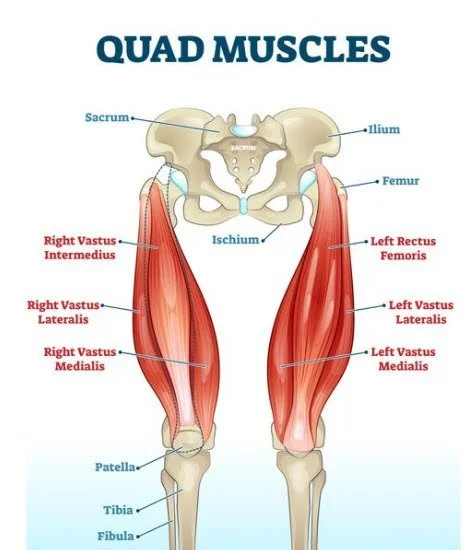
The Quads
Let's get back to muscles and talk quads. That huge group of, yes 4, knee extensor muscles on the anterior thigh. Nothing like a good set of quads, but what do they do and why do we need them?
Well, together this group of muscles is able to generate more force than any other muscle except for the maybe the mighty gluteus group. I say maybe because some people have overdeveloped quadand are "quad dominant" in their movements, but more on that later.
In conjunction with the glutes' hip extension, knee extension helps you push off the ground when you are running or jumping. This action of hip extension with knee extension is really central to many sports movements, even ones where you think strong quads are not needed. Of course, to jump and spike a volleyball, you will need strong quads, which is why those volleyball players have such impressive thighs and glutes, but also when throwing a ball, pitcher push off the ground generating power by moving their body forward and rotating their hips and upper body off of that strong base. And if you just show up to the gym for fitness sake, then almost any movement that involves lifting weight up from the ground will involve the quads.
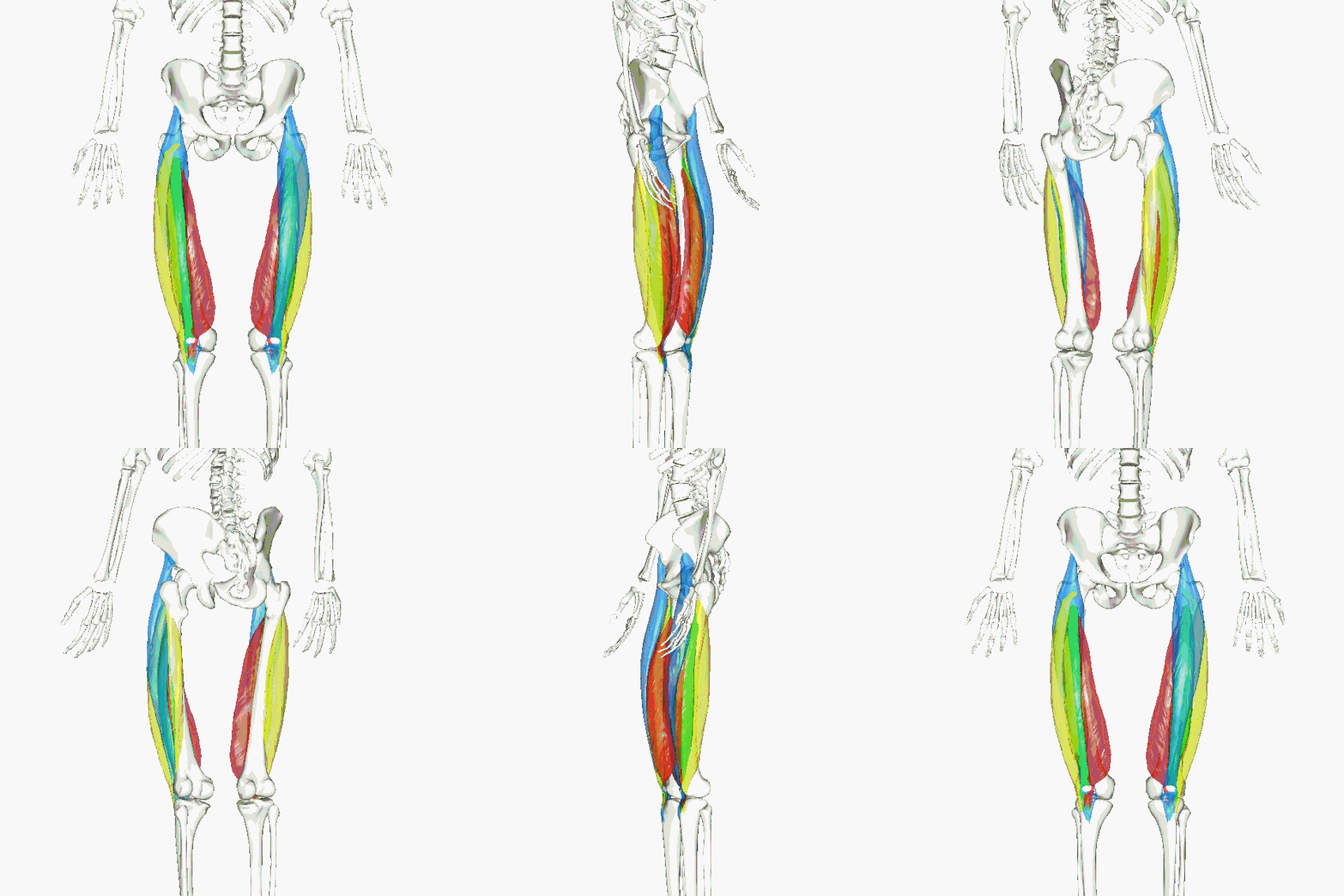
But we are getting ahead of ourselves, in order to know the muscles action, we must know it's anatomy because form follows function. The origin of the quads depends on which portion of the muscle you are talking about. Although the quadriceps femoris is considered one muscle because it tapers down to a single tendon on the knee, it really has four distinct muscle bellies, three of which can be visualized on a fit and trim individual.
While you're seated reading this, kick your knee out and hold it. Now the quads are the ONLY muscles that extend the knee. Place your hand on the patella, your knee cap. This is actually a sesamoid bone, a bone that develops within a tendon. This, the largest of the sesamoid bones, protects the tendon from damage and slides in a groove along the end of the femur. Feel to the bottom of the patella where it becomes a thick, tense tendon, This is the patella tendon, which below the patella attaching to the lower leg bone the tibia at the tibial tuberosity further down. Above the patella is the quadriceps tendon, but these two tendons with the patella sandwich in between are really just one extensor mechanism, without which, of course the knee would not extend when your quads fired.
All 4 heads of the quadriceps insert here at the quadriceps tendon, but originate from different area above. Are you still holding that knee out??? Good. Move your hand medially (toward the midline) and you will feel a tense muscle, maybe even see a little teardrop or admire it on this ballerina here. This is the vastus medialis, and it only extends the knee. This is because it originates on the upper femur and crosses just one joint, the knee. Of course, the vastus lateralus is on the lateral (outside) portion of the leg and makes up the majority of the thigh from the pocket of your jeans to your knee. It also just extends the knee for the same reason. This puts the vastus intermedius in the middle of the two vasti and does the same. Three heads with slightly different origins up near the top of the femur.
Now for the 4th quad muscle head, the rectus femoris, and it covers the entirety of the vastus intermedius. It shares the quadriceps tendon distally, but also crosses the hip joint originating at the hip bone structure called the ASIS (anterior superior iliac spine). This makes the rectus femoris both a knee extensor and a hip flexor.


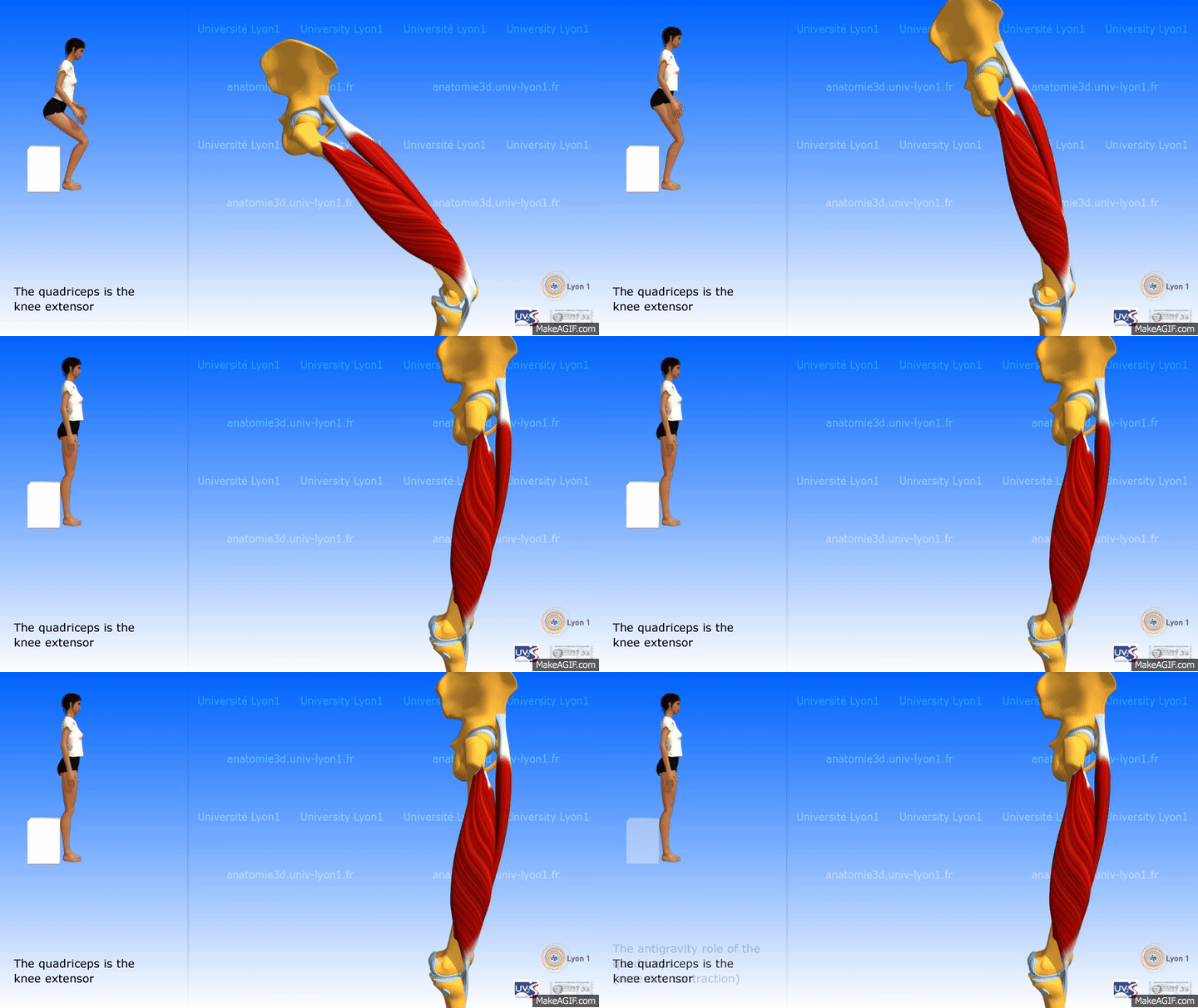
WHY FOUR MUSCLES TO DO ONE JOB?

When we think of knee extension we usually think of kicking a ball or sitting on that silly knee extension machine with your shin on the pad. Well, that is knee extension, but it is hardly difficult to do either. In those movements the thigh is fixed while the tibia is moving. The most oft useful function of the quads, however, is knee extension when the lower leg is affixed to the ground and your thigh is the moving portion of the lever. Take for example, standing up from sitting. Here (almost) your whole body weight hinges on the knee joint as your quads pull it straight. Pretty cool right??
Now add a few hundred pounds to your deadlift and try that! Think of the forces that are generated around the knee and pull through that tiny patella tendon you can pinch with two fingers. We'll get into that and quats next week.

Erector Spinae


Say hello to your erector spinae. Meet the group of muscles that run from your skull to your sacrum, all the way down the spine. Not just one muscle, these are whole families of muscles that live right next to the spinous process and pull on them and the skull and pelvis to create movement of the spine. For classification purposes they are categorized in three separate bundles...
Spinalis - run closest to the spine, start as low as L3 and run all the way up to the occipital protuberance, 3 muscles include
Longissimus - in between the two other bundles, these 3 muscles go from the sacrum all the way up to the temporal bone of the skull
Illiocostalis - most lateral group, also has 3 muscles that go from the sacrum and iliac crest all the way up to the cervical vertebrae
Is all this terminology confusing? Yes, the spine is a very complex structure when you look at the vertebral column above. Although I would love to give an in-depth anatomy lesson, let's keep this short for the purposes of learning some practical facts.
FACT #1
Your spine holds your head up. The bones in your neck (there are 7 of them) are called cervical vertebrae. There is a slight anterior (forward) curve to these vertebrae stacked on one another.
FACT #2
Your thoracic vertebrae don't move much because they are attached to ribs. Just below your cervical vertebrae are 12 thoracic vertebrae each with it's very own rib that forms the chest wall.
FACT #3
The lumbar (and cervical) spine can move in multiple planes. Because between each hard vertebral bone is a squishy disc that allows a little bit of movement between adjacent discs. With 5 lumbar vertebra stacked on top of each other a little movement (forward, back, side-to-side, or twisting) of one vertebra on another multiplied 5 times can lead to a fairly large range of motion. This is even more dramatic with the 7 vertebrae of the neck (think of all the ways you can twist and turn the neck).
Now let's take these 3 fact (0k, so maybe there are few more up there) and put them to good use. These small, thin muscles around your spine (the erector spinea and more) give you the freedom to move your back and neck in many different positions and then return the spine to its natural "S" curve. It's like adding tethers to a tent pole to keep it stable. These little muscles are way outmatched in terms of size and strength with huge muscles (like the glut max) that attach to the extremities. This means that the spinal erectors should not be the prime movers in any particularly heavy lift.
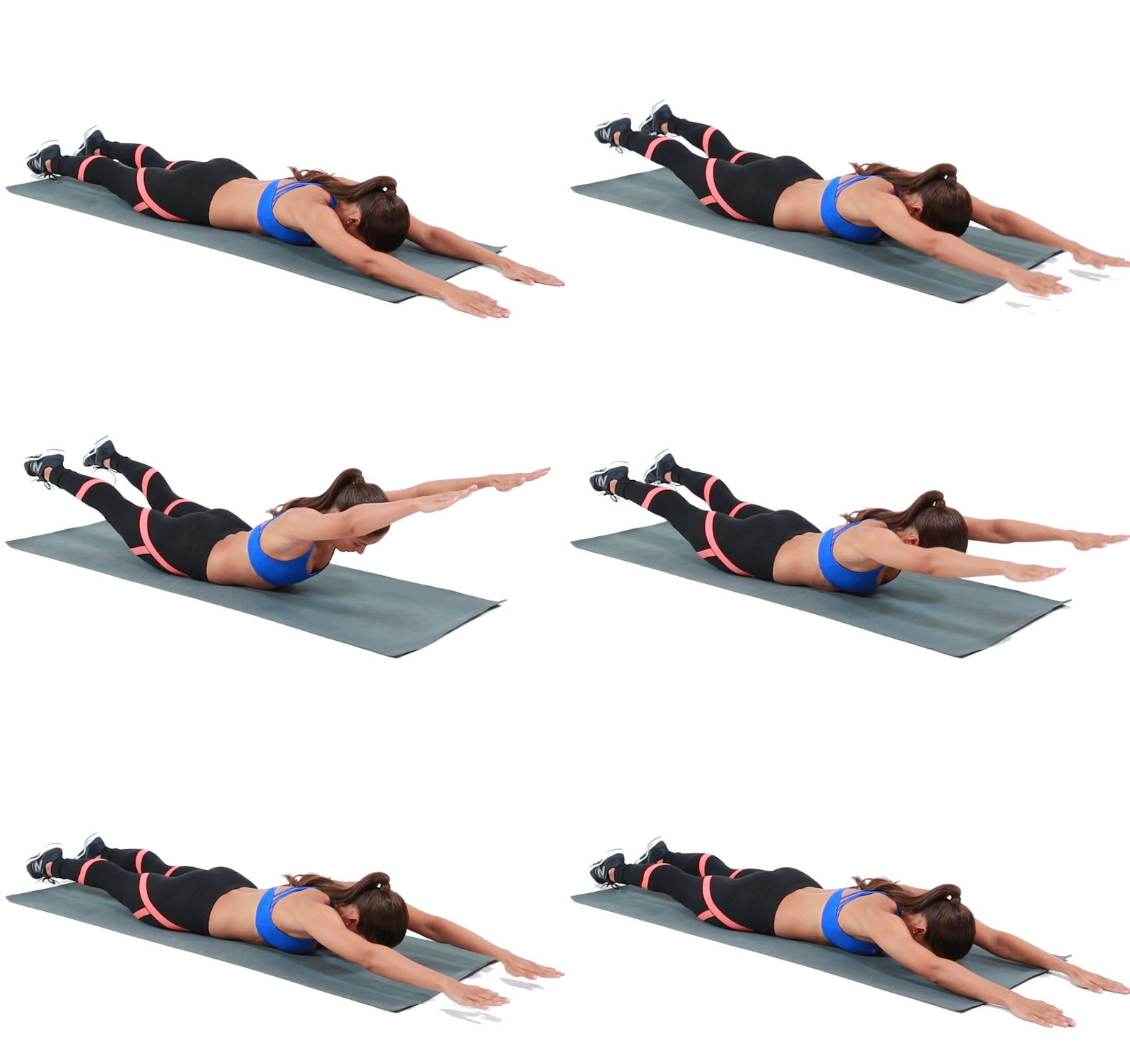
In the ER, I see many patients who "threw out" their back. This is probably just severe delayed onset muscles soreness (DOMS) for these tiny muscles that were torn to shreds (microscopically) by being put under stress way beyond their capacity. Take a look at the exercises below. See any weights in their hands??? No, body weight alone is sufficient to work these spinal erector muscles. In one exercise, you have dynamic changes the muscle length of the lower erector spinea, and in the other you have the muscles doing what they are best at, static contractions holding the spine stable. No heavy lifting required.
Check out the video below as well to start to use your spinal erectors and then stay tuned for how to correctly use them for the big lifts like deadlift.
The “Delts”

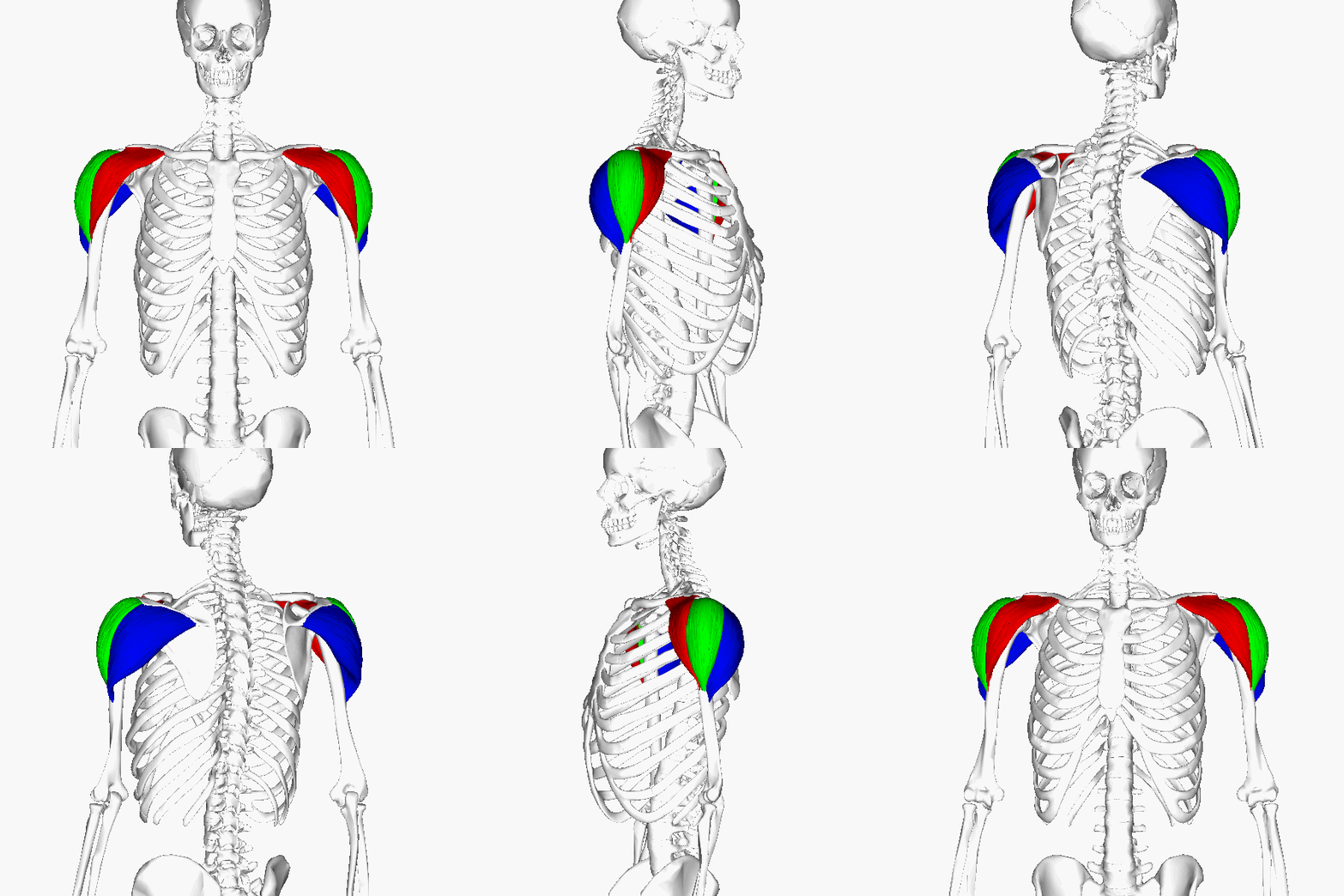
The deltoid muscle is really three muscles in one...as the animation from Wikipedia shows in vivid color the anterior (red), lateral (green), and posterior (blue) heads of the aptly named triangular muscle atop your arm. As you can see, the origin of the anterior delt is the clavicle, the mid delt is at the acromium, and the posterior deltoid is on the spine of the scapula wrapping around the shoulder from front to back. All of these portions then taper down and insert on the humerus (at the deltoid tuberosity), but because of the orientation of the muscle fibers, each section pulls the upper arm in different directions when it contracts. Thus, three actions for one muscle, as Jeff Cavalier shows below.
Therefore, if you want to thoroughly train the deltoid you need to perform movements in these three distinct planes of action.


The motion for the rear deltoid includes bent-over raises, followed by lateral raises for the lateral delt, and front raise for the anterior deltoid.
While we typically think of overhead presses (and maybe handstand push-ups) as should exercises, they primarily engage the front and lateral deltoid. Speaking of the front delt, bench press also heavily relies on it as well. In order to keep things balanced out, you will need to work on that rear deltoid. Sure, there are a lot of pulling exercises that will activate the rear delt, but given our proclivity to focus on the "mirror muscles" often the rear delt and other shoulder extensors are neglected.
Now I cannot mention training shoulders without talking about the rotator cuff. While I've said the rear delt is often neglected, I'm positive that the four rotator cuff muscles are definitely the most overlooked muscles in the gym. I've yet to see anyone training internal and external rotation of the shoulder at the gym, and even worse NO ONE ever warms up their rotator cuff before pressing big weights overhead. Why is this important???
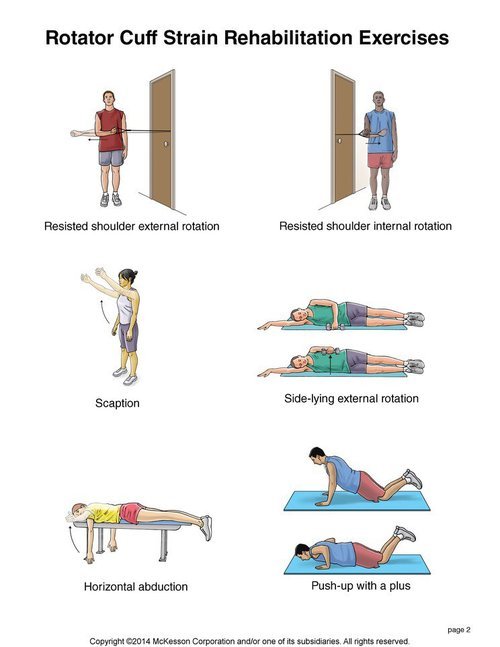
Well, that deltoid you want to look like a cannonball on top of your arm is multitudes stronger than your rotator cuff muscles, and if you continue to overdevelop this bad boy it will start to pull your humerus out of its "socket" on the glenoid of the shoulder blade. Why is this bad? Well, if you look at the picture below you will see that the upper arm bone, the humerus, has a roof above it called the acromium. If the deltoid pulls straight up, it will pull that humerus into the acromium roof and grind the bones together pinching any soft tissue, which happens to be one of the tendons of the important rotator cuff muscle. This will obviously cause pain, but more importantly, it will cause shoulder dysfunction. Instead of rotating, like joints are supposed to do, the bones of the shoulder joint will just be sliding around (called subluxation), and could even eventually dislocate. I will get more into the rotator cuff in a different post, but would be doing you a disservice if I posted training on the deltoid without mentioning rotator cuff training. For now, just be sure to add rotator cuff strengthening exercises to EVERY shoulder workout and if you're experiencing pain, you need to back off and get some rehab. Click on the image on the left to see some great videos explaining impingement syndrome and be sure to add at least the first three exercises on the right image (you can use the cable pulley machine) and click it for more rehab tips.

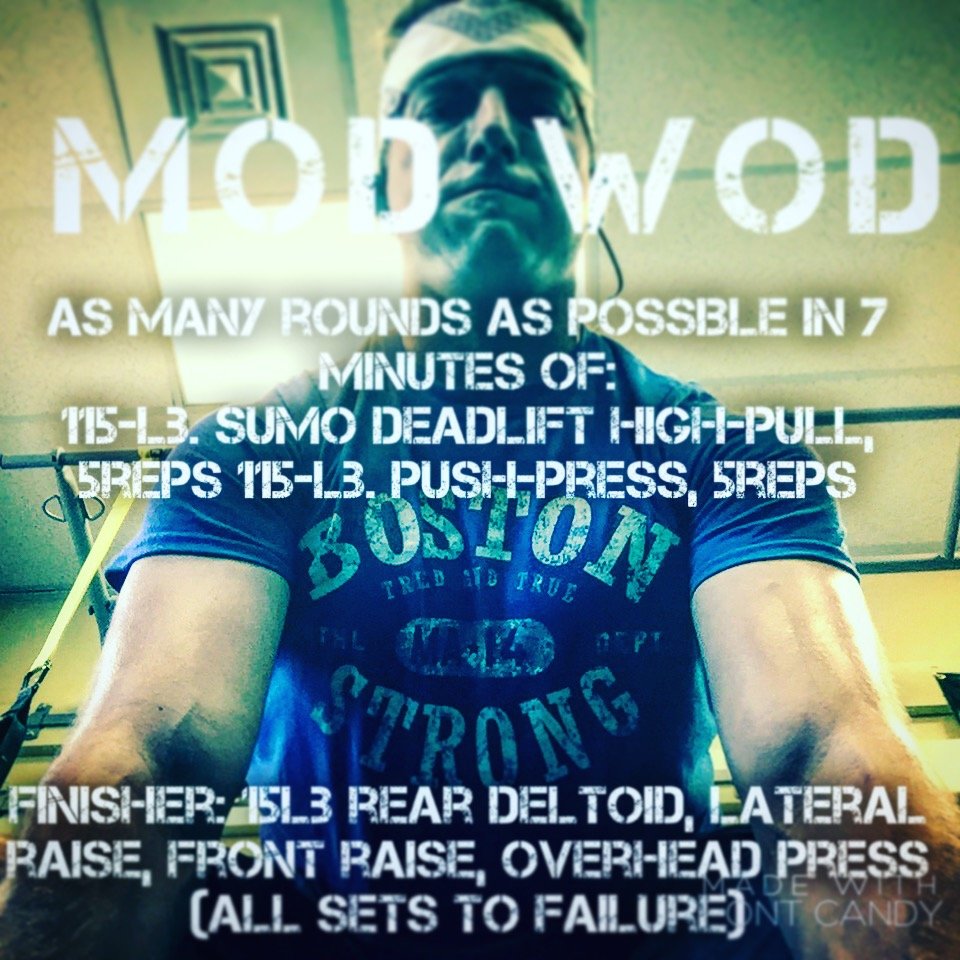
Now that we have warmed up our rotator cuff and strengthened the muscles to stabilize the joint, we can get into the workouts. My WOD above includes the Athlean-X workout below. If you can get through the lame introduction for the Bodybuilding.com video, it actually explains and shows the anatomy very well.

Semitendinosus & Semimembranosus

My hamstrings are sooooo sore. I just finished a killer Icelandic Crossfit workout where we did about a million power cleans. Apparently my hamstrings are my weak link in this lift. I was far inferior. The men were massive and the women all looked like super models. Seriously, if you ever get the chance to go to Crossfit Reykjavik then go. Your jaw will hit the floor.
Butt, back to hamstrings. As stated, these are my weak link in my posterior chain. Of course, the posterior chain of muscles include all those that help us stand upright. Think of bending over with knees bent, gripping that barbell, right before you go into a clean (as you try to keep up with the stunning Icelandic blonde bombshell on your right). All those muscle that must shorten to extend your hips and straighten your back and pull the bar up to the top of your chest (hamstrings, glutes, erector spinae, traps and rear delts) are those of the posterior chain. Today mine is sore, particularly the hamstrings.

FORM & FUNCTION
Mostly when we think of the hamstring muscles we think of knee flexors and maybe those ridiculous machines you see at the gym made for you to sit or lie down and flex the knees. Please, don't do this! Talk about the most unnatural movement you can do while in the gym. When would you ever do this in real life??? Never. I suppose it does cause the hamstring muscle to contract flexing the knee but this group of muscles is far more complex than that. The hamstrings cross two joints not one. Therefore, to properly train them you need to move both joints, the hip and the knee. The 3 muscle that make up the hamstrings include the semitendinosus, semimebranosus, and the biceps femoris.
As you can see from the images below they originate way up at the ischeal tuberosity. This is your sit bone, behind your hips. They then extend down beyond the knee to the top of the lower leg bones, the tibia and fibula. This means that full contraction leads to hip extension as well as knee flexion, but why would this be helpful? Extending one joint while flexing another?
Think of a sprinter. Usain Bolt's toe touches the ground and with incredible power he pulls himself forward with knee flexion and propels himself towards another world record with hip extension. This is an essential part of human movement. Running requires the coordination of these joints, best executed by the hamstring muscles. What a beautiful thing really. The simultaneous pulling and pushing. Joint movements flowing together in amazing synchronicity to produce the running stride. It is a sight to behold and yet it only takes a few years from toddler to child to develop the all out sprint.
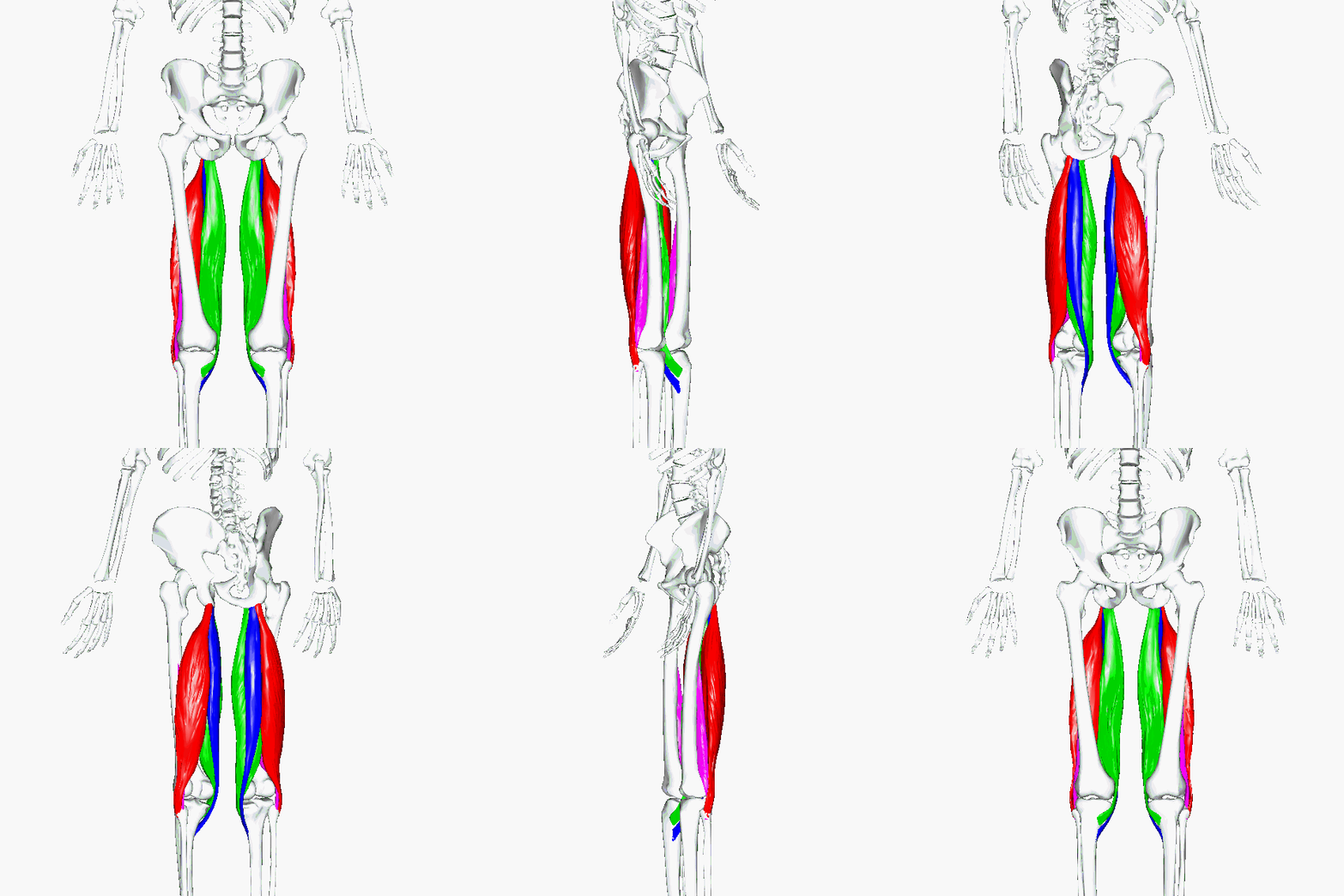


EXERCISE
There are no specific movements necessary to develop the semitendinosus and semimebranosus who insert on the inner aspect of the knee (just reach your hand down and feel these two tendons) over the biceps femoris which connects to the fibula on the outer posterior aspect of the knee (feeling laterally you will only feel one tendon behind the knee). All are exercised best as already mentioned above, hip extension and knee flexion. It just so happens running is about the only time you are really performing these actions at the same time so sprints are your best hamstring workout. These long, lean muscles are great at rapidly contracting to flex the knee and then extend the hip. Look at the sprinters above basically kicking their own butts with their exaggerated hamstring flexion. So warm up with butt kicks and go to high knees and all-out sprint to really work the hamstrings.
Other movements in the gym can target the hamstrings but rarely do knee flexion and hip extension. I've already said I hate the hamstring curls because they are so unnatural. Never will you have your heel loaded with weight to perform a movement in athletics. Instead, keep your feet on the floor (or at least start on the floor) to complete some great hamstring workouts. Anything that also engages the glutes, particularly fast-moving motions that are akin to sprinting, is good for hamstring training. This includes virtually every Olympic lift as they all start on the floor with hips flexed and depend on a rapid and strong hip extension to accelerate the weight. Deadlifts are a slow-motion version of this that asks the hamstrings to contribute, but as I learned, power cleans are a great way to get the hamstrings to contract rapidly (hip extension) while I quickly try to get under it (knee flexion) to catch the weight on my chest.
Give that a try and if you're not sore, just fly to Iceland for some real CrossFit, and you'll sure to be sore in the morning. Don't believe me? Check out this article on The Importance of Developing a Strong Posterior Chain for CrossFit and watch the video below.

Tibialis Posterior

As you can see from the area of red above, I have been having pain in my medial ankle, just behind that bony prominence called the medial malleolus. I actually wasn't sure which tendon was inflamed and causing pain (always painted red in pain commercials) until I did a little web research. There are a lot of tendons that move around the ankle so it took me some time to identify which one was bothering me.
ANATOMY
Amazing thing about the tibialis posterior (or posterior tibialis) muscle is that it is located just posterior to the tibia bone and is innervated by the tibial nerve with blood supply from the posterior tibial artery, but we don't really care about that. We know that form follows function, so if we know where the muscle attaches then we can figure out what it does. It originates below the knee and under the big gastrocnemius calf muscle so you won't be able to see or feel this muscle at its proximal portion. The muscle then tapers down to a tendon that runs in that area of pain I have behind my medial ankle. Here it runs posterior to the medial malleolus in it's own sheath with a couple of other tendons that flex the toes (flexor digitorum longus and flexor hullicus longus) finally inserting on the bones that form the arch of the foot.

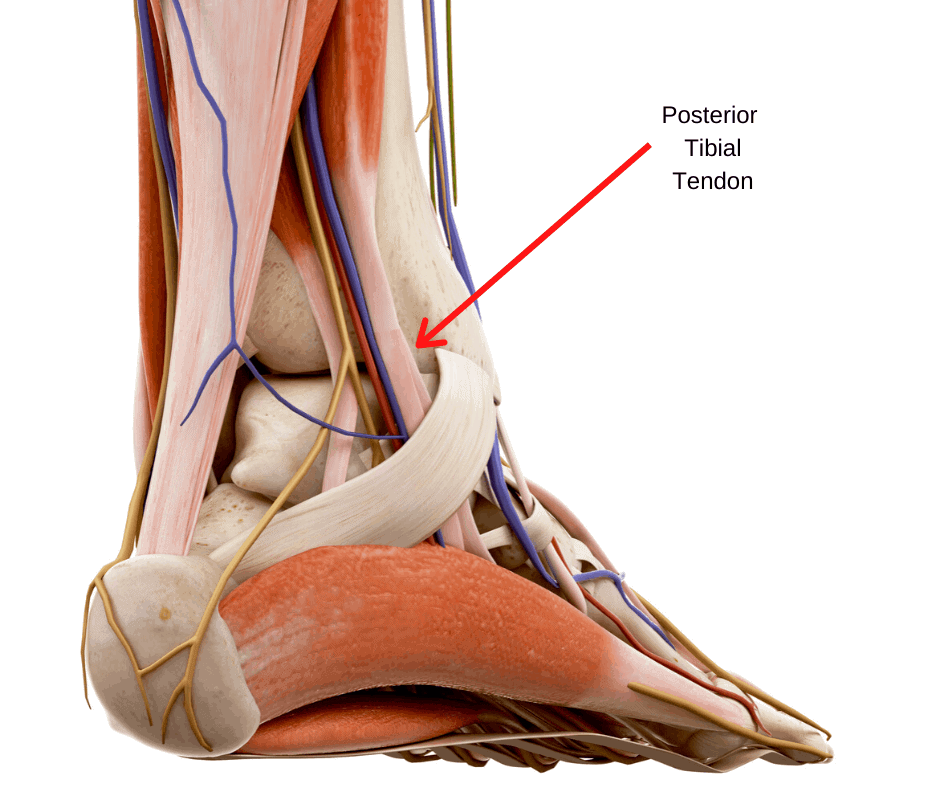


FUNCTION
Because it is located on the back of the lower leg and runs behind the medial malleolus, when the tibialis posterior contracts and shortens it will pull the foot down (called plantar flexion) and medial or inward (called inversion). Think about pointing your toes away from your nose and towards the other foot. You can see the opposite of this would be dorsiflexion (foot up towards nose) and eversion (toes away from midline). You can test your posterior tibialis function right now by standing up on your toes and then shifting your weight to the 4th and 5th toes. Dysfunction of this muscle leads to the opposite pictured above where the foot and ankle collapse inward. Flat feet could be named as the blame for this but that might be more of a chicken or the egg statement. Does a weak tibialis posterior lead to a flat everted foot posture? Or does flat feet overstress and weaken the tibialis posterior? I don't know the answer, nor do I really need to know. For this muscle to function properly the foot must be in neutral (correct) position to begin with (so you, and I, might need some shoe inserts to do this), then it needs to be correctly exercised to strengthen it to keep the foot in this proper neutral position.
As mentioned, probably the only time you will ever care about this muscle is when you have tendonitis. This is usually an overuse injury and is probably traced back to poor mechanics like your foot is chronically pronated. Good footwear, good posture, and some correcting/strengthening exercises below will probably be your best answer.

Adductor Longus

There are a bunch of hip adductors as you can see from the diagram, but why? If you ask most gym goers they're not going to say they're training "inner thighs" today. No one thinks that unless they naively believe that training a body part will somehow make it "skinnier." Like feeling the burn in one area of your body is going to burn that local subcutaneous fat. Tell me you don't believe that. Muscles get energy from local stores in the muscle and from the blood stream, not nearby fat stores. Those fat stores are just where your genes tell your body to place excess calories and activating a nearby muscle isn't going to somehow "melt" that fat. Please don't train the adductors searching for that elusive thigh gap (that's also more about bone structure and genetics than anything else).
So we have a adductor magnus and minimus as well as today's muscle, adductor longus, that also has a partner, the adductor brevis. If there is a big (magnus) there is usually a small (minimus), as well as a long and a short.
Of course all these adductor muscles adduct the thigh (bring it midline). Not really a super important action in everyday life, and as pointed out, not an action we do at the gym often with most of our movements being hip and knee flexion/extionsion during squats and deadlifts. Not that the adductors don't play a role in these movements. We have already seen the adductor magnus play a role in hip extension at the extremes of movement, and just recently I have felt some significant muscle soreness in the adductor area of my thighs after high rep deep back squats. Seems like I have some work to do with my adductor strength.
When the leg is not planted on the ground, adduction means bringing the thighs together. Not a very useful move although you certainly wouldn't have the agility to play any change of direction sport without adduction. Imagine trying to move laterally and ending up in a split. Not good. Side to side movement depend on the adductor group, of course. Therefore, the best training in my mind, is practicing those movements, defensive slid/shuffle. Forget the silly machines and awkward movements in the gym. Work on lateral movements on the field or court to build these muscles.
The adductors are also very active with hip flexion and extension stabilizing the joints, especially under heavy loads through full range of motion. The adductors pull the ball of the femur into the socket of the femur stabilizing the joint. To take it up a notch, go with one-legged (or is it one-leg?) squats and deadlifts. This requires even more stabilization around the pelvis to shift all weight to one leg and go through hip flexion then extension. Without strong adductors your knees will be wobbling through your pistol squat.
That's it. I don't have any specific exercises for this group. Just do your sport specific training and try to incorporate single leg exercises into your routine. In general, mimicking actual human movement in your training beats any shameful machine at the gym.

Adductor Magnus
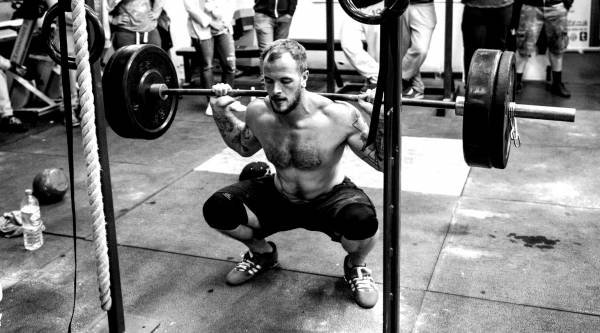
It's not often that I learn about a muscle from Instagram, but that's exactly what happened after I looked at this post by the very fit steficohen (look closely at a great exercise for this muscle as well, but it spoils the surprise for now).
The reason this is surprising to me is that adductors adduct! They pull the limbs closer to the midline. This is not what is occurring to the thighs when you squat. Hips and knees extend during the upward motion of the squat. Knees are not supposed to be knocking together with hip adduction.
But...apparently, I have much to learn about the adductor group of muscles on the medial thigh that include the adductor brevis, adductor longus, and the mighty adductor magnus.

Anatomy
As you can see the adductor magnus originates on the pelvis, the lower ring of the ischium to be exact, but it has a really cool feature in that it twists as it goes down to its insertion onto the medial and distal femur (picture to the left includes the adductor longus on top with the magnus twisting its way down the inner thigh only seen on that top down view to the right).
Why have this design? It's almost like it is working against itself pulling the femur in and up, but this actually pulls the ball of the femur into the socket of the pelvis and stabilizes the joint while other muscles pull from the front or the back to cause movement. It will also extend the hip depending on what position the hip is in. With the hip in a fully flexed position (like at the bottom of a squat) the fibers of the adductor magnus will be lengthened, meaning that if they contract and shorten there will be some hip extension.
Of course, the primary movement of the adductor group is to adduct the thigh when it is freely moving, but many times the feet are firmly planted on the floor (like in a squat) so adduction is virtually impossible yet the hip is moving through flexion and extension with powerful glutes and quads pulling on the femur. In order to be a smooth movement the hip joint needs to be stabilized from side to side movements. You can imagine a wobbly kneed weight lifter is not going to squat very much.
Finally, there is a peculiar portion of the adductor magnus that inserts down on the medial condyle of the femur, called the ischiocondylar portion. See that tiny string of muscle that attaches further down the bone than the majority of fibers terminating on the shaft of the femur? These fibers are oriented vertically and can be followed all the way back to the ischium (sit portion of the pelvis) making this part of the muscle the "4th hamstring" because when these fibers shorten they will extend the hip back. While the majority of the fibers run at an angle to adduct, these are oriented only to extend the hip. Yet again, this shows us one muscle with many purposes. It's not just a matter of turning "on" or "off" a muscle that makes a joint move but individual fibers in particular portions of muscles can cause vastly different movements.
Function
Well, the function of the muscle has been discussed in it's anatomy (per usual), and this does finally explain why my groin is often sore after I squat. Let me tell you though, that is NOT going to get me on that weird hip adduction machine at the gym.
Instead, I will do that only slightly less awkward exercise discussed at the top of the page or check out some of these posts on strengthening your adductor magnus to improve your squat.
Squat University asks THE GREAT SQUAT DEBATE: TOES FORWARD OR ANGLED OUT? and shows that toes out activates the adductor magnus more.
John Clark reports 3 Reasons You Don’t Squat More (And What To Do About It) including how to test and strengthen the adductor magnus.
and as seen above the incomparable Stephi Cohen shows the importance of strong hip adductors and how to train them.

BUT WAIT...THERE'S MORE
Want to stretch your aductor magnus??? Of course, you do! Stretching is part of strengthening. And, of course, you want some videos to tell you more.

Gracilis
M. gracilis: Ursprung, Ansatz, Innervation, arterielle Versorgung, Dehnung, Kräftigung.
Ok so maybe you won't be able to understand what is being said, but the graphics are cool.

Gracilis
...sounds like something you might say when someone sneezes....except that here we are talking about a muscle. Yup a long thin muscle that starts on the pubic bone and ends on the inside of the knee at the tibia. Not much mystery here. It has but one job...hip adduction. What's adduction you say?? The action of bringing a limb towards the midline. Pretty simple adduct to midline, abduct away from midline. Pull your knees together and you are adducting your hips.
To spare you all the writing you can watch the video to the right where Becky will only somewhat awkwardly, but anatomically accurately, discuss the anatomy and function of the gracilis muscle. Good job Becky. As she mentions, because this muscle does cross two joints (the hip and the knee) it will perform actions on both joints.
This muscle doesn't get a whole lot of attention in the fitness and body building world because pure adduction is not much a necessary movement, but as we will learn next week in the adductor series, stabilization of the hips and knees is important for squats and deadlifts and such.
For now, I wouldn't add any lifts specifically for the gracilis unless you are particularly weak in the hip adductor realm as evidenced by very shaky knees when squatting or you especially need hip adduction to keep from falling off your horse. Stretching all these adductors is however, no joke as I would suggest putting on yoga pants before you split your jeans trying the frog stretch below.
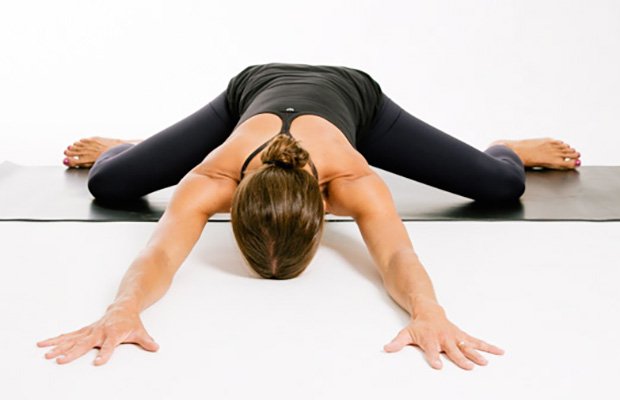

Biceps Femoris
It's biceps day, bro...

Ever had biceps day...for your legs??? Of course not. Any meathead who's ever gone to the gym for "biceps day" wasn't referring to the ol' biceps femoris. It should be no surprise, however, for the biceps brachii expert to know that there must be two heads to the biceps femoris. In this case, the long head extends beyond the hip joint to attach with the semitendinosus and semimembranosus on the ischeal tuberosity of the pelvis while the short head attaches more distally on the femur bone itself (just about where the gluteus maximus inserts). Both of these heads fuse together to form one muscle belly and one tendon that then splits to grab onto the posterior tibia and fibula (slightly different than the picture the right makes it appear.
All this anatomy to say that the long head of the biceps femoris pull the hip in extension and the knee in flexion (like the other hamstrings) while the short head just flexes the knee when it contracts (although it can work with the gluteus maximus to achieve both). As mentioned before, this hip extension with knee flexion is a pretty important coordinated movement involved in the running stride.
One aspect of hamstring function that we haven't mentioned yet is the eccentric phase also extremely important in the running stride and might be one of the sources of hamstring injuries. As opposed to the concentric action of the hamstrings after the foot touches the ground shortening the muscles causing hip extension and then knee flexion, the eccentric phase, where the muscles are contracting but lengthening, occurs just before the foot strikes the ground.
This is such an important concept, let me go over it again. First look at the hamstrings in the still image on the right, and watch them closely as you look at the slow-motion video. In this freeze-frame, you see clearly defined contracting hamstring muscles in BOTH legs. The right leg is going into hip extension and knee flexion perfectly suited for the hamstring muscle group (you can see them bulging on the back of the leg), but also the left leg is just about to strike the ground, having come out of knee flexion due to the mighty quads contracting, and is almost in full extension yet, you can also see clearly defined hamstring (the medial muscle tendons mostly) contraction. What's up with that??
The huge quads do a tremendous job extending the knee through the leg swing phase and turning off as the knee reaches extension, but it is the hamstrings that gently brake this movement to prevent the knee from slamming into extension or even hyperextending with every stride. The quads are going to turn back on to prevent the collapse of the knee as the leg bears weight during the foot strike while the hamstrings then convert from an eccentric to a concentric phase fluidly as the running stride then goes back into hip extension/knee flexion.
The hamstrings perform eccentric breaking of rapid knee extension before foot strike followed by pulling your center of gravity over then foot and pushing off with their concentric contraction.
Beautiful, isn't it??? Just to make things even more awesome, the hamstring tendons go on either side of the knee making it possible for the hamstrings to steer the lower leg by turning it inward or outward, pointing the foot in different directions but pulling on the tibia or fibula more or less.
The article: How Muscles Really Work: Hamstrings discusses this concept of controlling the deceleration of knee extension as well as steering of the lower leg with internal and external rotation, which the author refers to as "comparable to the reins on a horse, steering and coordinating the lower limb, particularly in dynamic cutting motions and changing direction." I encourage you to check out this informative and well-written site for more information, but we must get onto training and a major part of training is injury prevention especially when the hamstrings seem to be so oft-injured.
We have to know how the hamstrings function in athletics to properly train however, and now we know that the hamstrings perform important eccentric and concentric contractions during each running stride. Furthermore, it's postulated that this eccentric contraction is responsible for most hamstring injuries.
This makes sense when considering the training of other muscles. We know that it is the eccentric phase of muscle contraction that causes the most tissue damage leading to the most hypertrophy. When applied to the hamstrings, it is that eccentric phase of contraction during a sprint where the muscles are opposing the contraction of the quad and the momentum of the leg these muscles are most prone to damage. A damaged hamstring is then painful in almost every aspect of lower leg movement in running and thus possibly the reason why it is difficult to recover from.
Another possibility might just be that we are training them wrong! If the eccentric phase is where the injuries mostly happen, then we must have a strong focus on the eccentric contraction of the hamstrings in training. Also, we need to include movements that involve both hip extension and knee flexion when training as it's only the little short head of the biceps femoris that does isolated knee flexion. Out are all those stupid machines at the gym where knee flexion is the only movement. In are movements that focus on both hip and knee movement and train the eccentric phase.
Below are some of my most trusted sources in training techniques including a couple of videos by some great physical therapists who give their advice away for free! I will say that the last video has a lot of good data including an anatomy review and literature research, the author of the video blog is a body-builder and therefore, more talking about hypertrophy and aesthetics than functional movement which is the reverse of my training goals and more in line with the top video (also great free advice). Enjoy.
Gluteus Medius
Brought to you by peakfatlossandfitness.com/glute-exercises where you can find a book I wish I had penned, Gluteus to the Maximus.
In the middle...

I'm terrible at the half-moon yoga pose. Try it for yourself. You'll quickly feel the burn. Now, keep holding it. If you're anything like me that muscle that is screaming is the gluteus medius.
Just peaking out from under the gluteus maxiumus, you just might be able to feel it flex under the part of the pelvic bone called the iliac crest. This is where the "glute med" originates, as you can see looking at the backside of anatomical models above. It inserts on the greater trochanter at the top of the femur, as you can see in the rotating model above. By pulling the greater trochanter closer to the iliac crest the leg is moved in an action called, abduction.
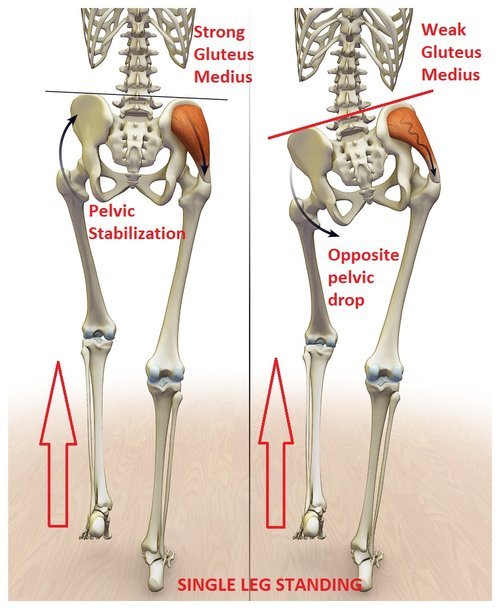
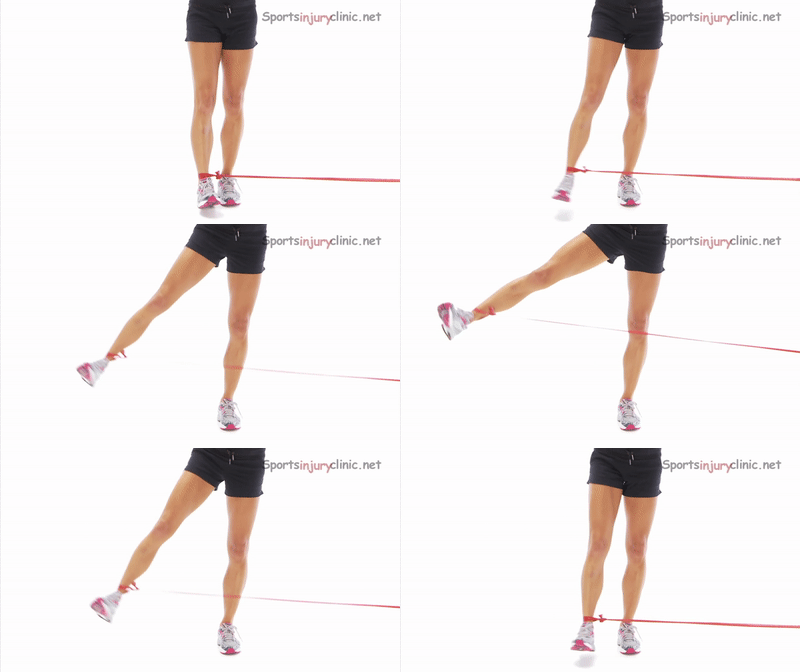
You can try hip abduction for yourself in a movement easier than the half-moon. Stand up with your feet together, toes pointing forward. Now shift your weight to the left leg, only lightly touching your right toes to the ground. You're already engaging your left gluteus medius so long as your hip stays level to the ground. Now take it a step further and raise your right leg to the side, and you will feel your right gluteus medius engage. As usual, with the body, your muscles are made to function in tandem, add to that the fact that many of the body's "overlooked" muscles are the stabilizers (see rotator cuff muscles of the shoulder).
Without stabilization of your hips, those impressive movements like running and jumping are just not possible. You will not be able to transfer your weight and push off the ground if your spine is flopping around. Hips and core need to stay rock solid to (just like in yoga!) in order to perform any single-leg activities. Furthermore, lots of athletic movements are side to side (lateral movement in the frontal plate), but the vast majority of what we train in the gym is only movement in the sagittal plane (i.e. front to back, think squat or deadlift).

If we are only moving our hips in the sagittal plane (flexion and extension) with squats and leg presses, then we are likely to have weak hip abductors (like the glue medius). The adductors and abductors allow you to shuffle your feet in a defensive slide in basketball. In addition, to supporting the hips in the deadlift, the abductors are the prime movers in side-to-side movements.


Which brings us to the workouts...
I suppose you could be like this fellow to the right and perform some hip abduction with a cable machine, but I think the exercise band wrapped around the knees is more versatile. Start with performing squats with the band around your knees while you resist adduction. This could also be used in your warm up before doing squats and will help you keep good form.
Isolating movements with the band include the aptly named fire hydrant and clam shell exercises seen above. I think you can figure out which is which. Of course, as mentioned at the top, many yoga poses with the hips perpendicular to the ground, like half moon, include resisted hip abduction.
Also, check out Chad Waterbury's Build Your Glutes Fast! page for exercises and for even more nerdy stuff, read his Glute Training Science page to get some EMG data, etc.
What I would most recommend for the athlete, is adding the band around the knees for many of your sport's specific movements. This might mean defensive slides in basketball or cross-court shuffle in tennis. If you can perform these well with the band, you will feel the difference in games without it.

The Glutes
What I find amazing is this concave structure of the posterior pelvis you see rotating above is filled in with all these muscles to make it convex, sometimes impressively convex!!! Although some of this might be due to unlucky, or lucky, fat deposition, for many athletes it is due to good ol' hard work and muscle hypertrophy.
There's a lot more to learn about these glutes, and simple internet search told me that there is a lot of interest out there. Which brought me to getglutes.com because, of course, this exists.
Needless to say, there is a lot of material on YouTube aimed at improving "form" far more than function. So let's get back to function and the form can just follow. What all of these workout videos have in common is trying to maximally activate and contract the gluteus muscles over the quadriceps. As I mentioned previously, many of us are quad dominant, meaning that we activate the knee extensor muscles with squats and deadlifts, running and jumping, over the hip extensors.

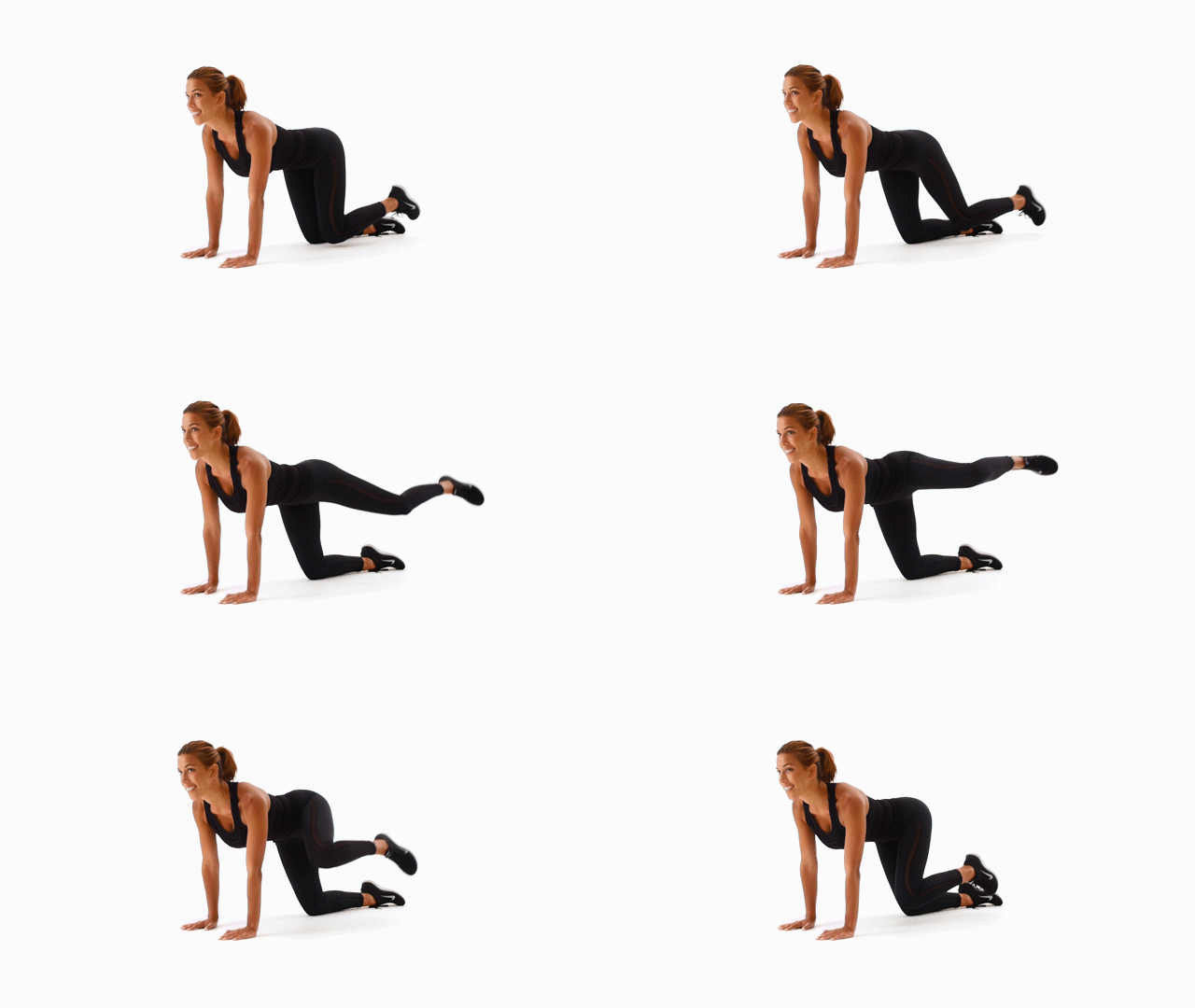
First, lets meet the players, the gluteal family. We've already met gluteus maximus and this is our primary hip extensor. The hamstring muscles will also play a role in hip extension, but because they cross two joints they also famously flex the knee. As mentioned the glute max however, just crosses one joint and it's purpose is there. Now we can see from its fiber orientation, that it doesn't just work in one plane. Shortening of the gluteus maximus will result in hip extension and some external rotation. Now, most of what we talked about thus far are compound movements or exercises, like squats or deadlifts or just jumping over 7 footers. In these movements the gluteus maximus works in concert with other muscles to produce the movement, so its line of pull is primarily hip extension, usually without hip external rotation. If you did the workout last week, however, there was a combination of compound movement and isolating exercises that included both hip extension and external rotation (like this awkward exercise no one will ever do at a crowded gym).
These isolating exercises are nice to fatigue the muscles (and maybe wake up that sleeping glute), but they hardly tap into the powerful potential of the glutes. The best way to exercise any muscle is to put it on stretch and then contract through full range of motion. As mentioned, however, we don't like to do this and tend to cheat with our back when we do go into hip flexion.
My tip is this: When performing your deadlifts or squats, push your hips back to get more flexion, drive your heels into the floor rather than going onto your toes and using more quads, and finally, squeeze the glutes at the top by adding some extra hip extension. Ok, so maybe Athlean-X has the same tip. So as Jeff says, go do some real step-ups where you start in nice hip flexion, butt also ends in full hip extension.

All we're really asking of the gluteus maximus is to do it's job. For some reason, we've let it get lazy and relied on other players to do the work. Well, you can't put together a championship team, or body, unless everyone, and every muscle, is performing at their peak. One weak link and you won't be hoisting any trophies. Don't believe me? Ask Julian Edelman. At 5'10" 200ish lbs, he's not the biggest guy on the field, but he packs some power into that small frame. And you could too, if you tap into the potential of your butt ;)

Think Jules does some lunges??
Just like the sprinters above or the dunkers from last post, Julian drives off of the line and through defenders with incredibly strong hip extension. I love all the exercises above and below that engage those glutes, but nothing beats actually performing those sport specific movements. I bet some of Julian's best workouts are game day. Sprinters have large glutes because they get on the blocks every day. Don't be afraid to get out there and run, jump, and play. As great as the science is, some of the best training is just practice, practice, practice.
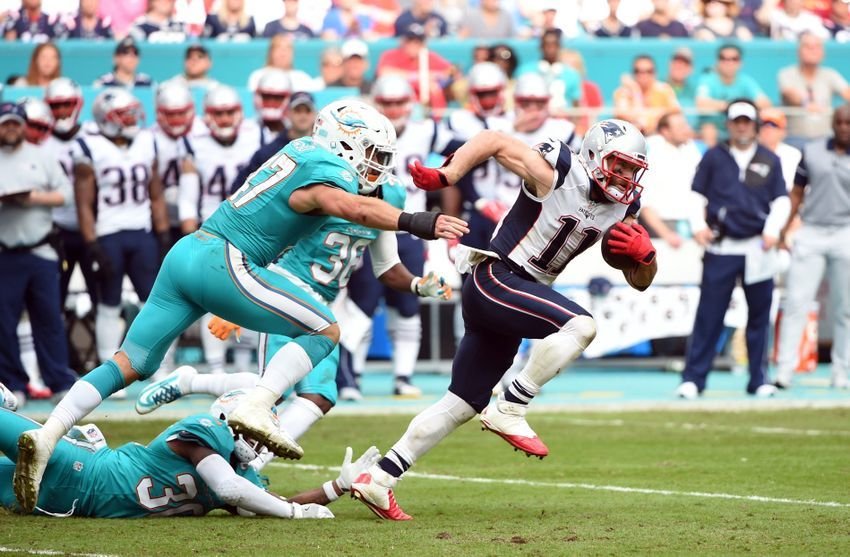
Sprint off the line in any sport with strong glutes.